
‘Cyber panda’ to offer emotional support

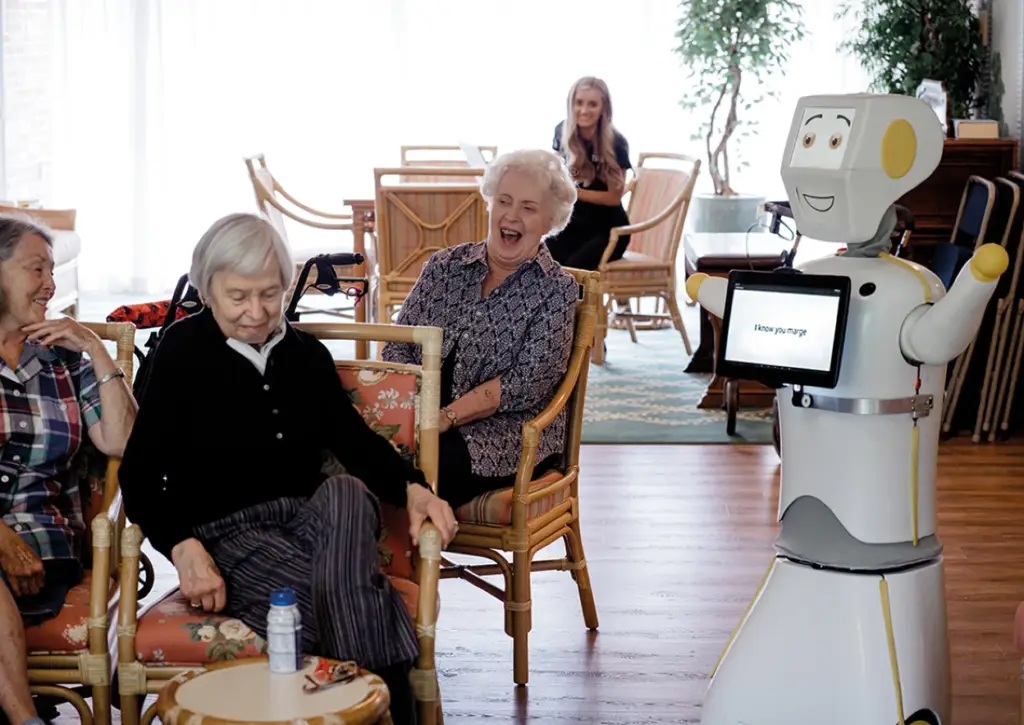
A new biomimetic robot resembling a panda cub is being trialed in Shenzhen nursing homes to provide emotional support. Using AI to detect resident distress, it offers companionship and reduces the burden on staff by providing a calming presence for elderly patients during moments of agitation or loneliness. https://www.xjtlu.edu.cn/en/news/2026/02/anan-biomimetic-ai-robot
Four Healthcare Robotics Companies You Should Know (Video)
The TUG robot continues to dominate hospital logistics, with recent data showing a single unit can save the labor of 2.8 full-time employees by automating cart deliveries. By handling linens, food, and lab specimens, it allows nurses to focus exclusively on “top-of-license” patient care. https://www.mddionline.com/automation/four-healthcare-robotics-companies-you-should-know-video-
CES 2026: Shift Toward Deployable Assistive Robots

The Health Tech pavilion at CES 2026 marked a turning point, moving from prototypes to “products you can buy.” New mobility-assist bots and smart rehab devices are being marketed directly to assisted living facilities, aiming to bridge the gap in the global caregiver shortage with practical AI hardware. https://www.youtube.com/shorts/aIIz-hIBDwo
The Future of Robots and Older Adults
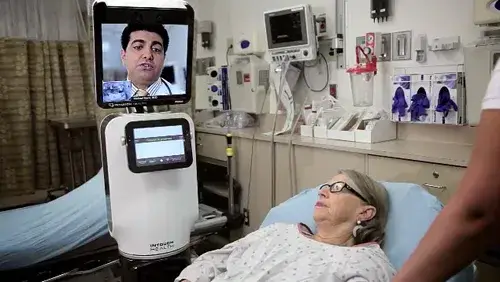
New telenursing platforms are being developed to allow nurses to monitor vitals and perform basic medical tasks remotely. These robots prevent infection transmission in contagious wards and allow one nurse to oversee multiple patients through a robotic “avatar” that can navigate the room and interact naturally. https://www.nature.com/articles/d41586-022-00072-z
Can Medical AI Lie? Large Study Maps How LLMs Handle Health Misinformation

A massive study analyzing over a million prompts found that current LLMs can repeat false medical claims if they appear in realistic-looking hospital notes. This reinforces the 2026 nursing role of “Strategic Authenticator,” where nurses must verify all AI-generated summaries against their clinical observations to ensure accuracy. https://www.mountsinai.org/about/newsroom/2026/can-medical-ai-lie-large-study-maps-how-llms-handle-health-misinformation
American Nurses Foundation Announces New $10,000 Microgrants for Research on AI and Innovation in Nursing

With applications due by February 17, 2026, these grants empower nurses to build and test their own AI tools. This initiative ensures that future technology is designed by those at the bedside, focusing on “nurse-friendly” automation that enhances rather than complicates the clinical workflow. https://www.nursingworld.org/news/news-releases/2025/american-nurses-foundation-announces-new-$10000-microgrants-for-research-on-ai-and-innovation-in-nursing/
AI in Healthcare Administration: A Complete Overview

Administration comprises 25% of all healthcare costs, making it a key target for automation. Organizations are using AI to support documentation, coding, scheduling and more. https://healthtechmagazine.net/article/2026/01/ai-healthcare-administration-complete-overview-perfcon
Getting Smart With Virtual Assistants in Healthcare
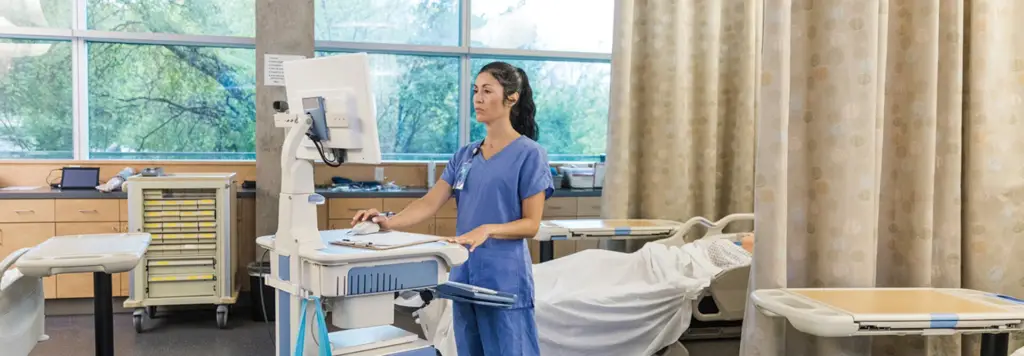
Instead of sifting through massive clinical manuals, Mayo Clinic’s new in-house AI assistant curates instant, location-specific policy summaries. For float-pool or travel nurses, this eliminates the “information lag” when working in unfamiliar units. https://healthtechmagazine.net/article/2026/02/getting-smart-virtual-assistants-healthcare
Beyond the Chart: The AI-Driven Nurse and the Hospital of the Future
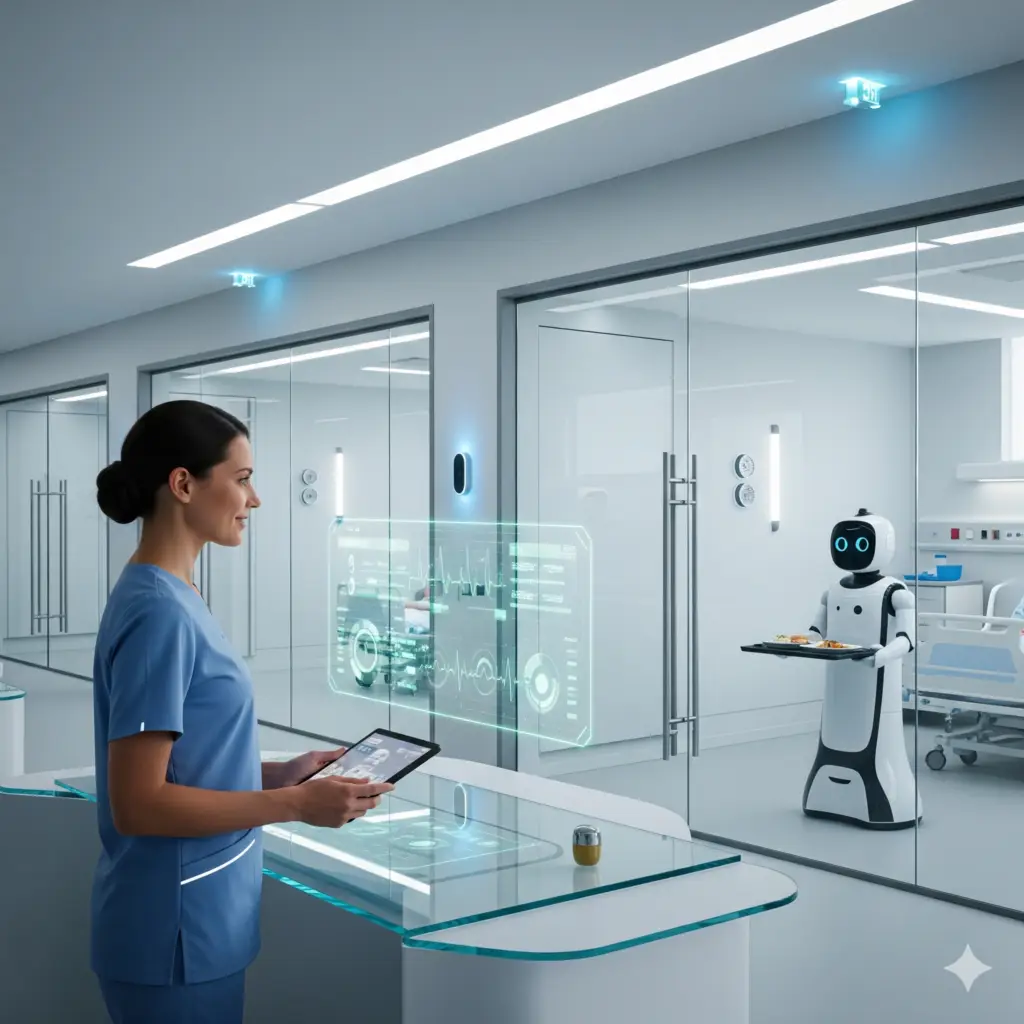
By: Jude Chartier RN / AI Nurse Hub Date: February 5, 2026 Abstract The nursing profession is currently navigating a pivotal transition from manual data entry to high-level clinical oversight. As healthcare systems grapple with unprecedented levels of clinician burnout and fiscal constraints, Artificial Intelligence (AI) has emerged as a dual-purpose solution: a tool for […]
The Aesthetic of Care: Humanoid vs. Functional Design in Healthcare Robotics
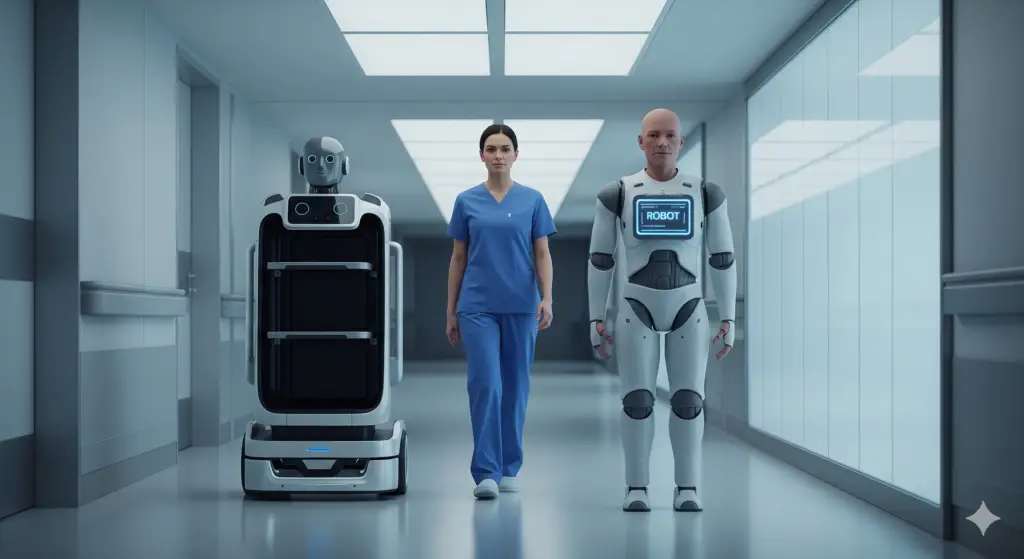
By: Jude Chartier RN / AI Nurse Hub Date: February 2026 Abstract As robotics and artificial intelligence (AI) achieve unprecedented levels of biomimicry, nursing leadership faces a critical decision regarding the aesthetic integration of these technologies into clinical environments. This article examines the tension between humanoid design—characterized by human-like gait, facial expressions, and thermal realism—and […]