AI Healthcare News That Matters

Clinical Decision Support an Advancing Frontier for Palliative AI

The new “Patient Summary” tool now highlights inferred conditions from detected symptoms before a formal diagnosis is made. For palliative and home-health nurses, this provides an instant “longitudinal snapshot,” ensuring they are aware of subtle patient declines that occurred between visits.

Read More

Best AI tools for nurses 2026: clinical reference, documentation, and CPD

Abridge Nursing’s enterprise platform is now live across multiple large systems, specifically targeting structured flowsheet capture through ambient listening. For acute care nurses, this “clerical reclaim” eliminates the burden of manual charting, allowing them to focus on “eye-contact nursing” and high-level clinical reasoning.

Read More

What you missed at this year’s HIMSS conference

At the 2026 Health Information and Management Systems Society (HIMSS) Global Health Conference & Exhibition, thousands of healthcare leaders and organizations gathered to discuss the rapid expansion of AI agents, new technology partnerships, and more. 

Read More

The AI workforce is now ‘hirable’: How Nvidia is rewiring healthcare from the inside out

Nvidia’s new foundation model allows humanoid robots to translate natural language commands, such as “prep the sterile field,” into precise physical motions. For perioperative and floor nurses, this provides a robotic partner with situational awareness that can autonomously manage instruments and supplies during procedures.

Read More

Real Results, Right Now: How Epic AI Is Reducing Costs, Improving Care, and Helping Patients 

Epic unveiled a new family of foundation models today called “Curiosity,” trained on anonymized real-world records to forecast future diagnoses and procedures. For discharge nurses, these models provide a 12-hour “safety window” to identify potential post-acute needs, allowing for coordination to begin before the patient is even stable for transfer.

Read More
PAs Transform Post-Discharge Care, Reduce Readmissions with the Support of AI

This AI platform continuously monitors patients after they leave the hospital via virtual check-ins and real-time data analysis. For community health nurses, it provides an “early-warning” layer that flags complications like post-surgical infections before they require a readmission.

Read More

These AI Nurse Like “Agents” Cost $9 Per Hour – Threat or Help To Human Nurses?

A partnership between NVIDIA and Hippocratic AI has produced agentic AI “nurses” that handle routine patient inquiries and post-care follow-ups. While they don’t replace human judgment, they offload low-level tasks, allowing human nurses to focus on complex clinical reasoning while the AI manages routine home check-ins.

Read More

Virtual nurses lighten the load

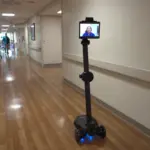
Baptist Memorial is using OhmniLabs robot technology to maximize efficiency. Virtual nurses operate these robots to deliver education materials and documents to bedside teams. This model allows experienced nurses, who may no longer meet the physical demands of bedside care, to continue contributing to high-quality patient care.

Read More

Cognosos unveils next generation staff-patient encounter-sensing tags at HIMSS26

Previewed today for the upcoming HIMSS 2026 conference, these AI-powered tags use tag-to-tag interactions to automatically log staff-patient encounters. This technology eliminates the manual data entry of “who saw whom and when,” returning valuable time to nurses and providing precise data for compliance and safety audits.

Read More

Robotic Nurse Assistant Market Overview of Regulatory Pathways and Approval

New market data released today confirms the robotic nurse assistant sector has surged to $1.81 billion, driven by urgent needs to mitigate staff shortages. For bedside nurses, this indicates a massive influx of autonomous teammates designed to handle repetitive tasks like supply delivery and patient monitoring, aiming to reduce the physical “logistical drag” on human staff.

Read More

How Singapore’s eldercare industry is gearing up for the silver tsunami with robots, motion sensors and smart gadgets

Singapore has successfully integrated motion-sensing robots and smart gadgets into the homes of 5,000 seniors post-discharge. This pilot shows a significant decrease in readmissions, as the robots detect subtle changes in patient behavior, allowing nurses to intervene virtually before a medical crisis occurs.

Read More

25 Healthcare AI Use Cases with Examples

This comprehensive 2026 toolkit identifies 25 critical ways AI is currently impacting nursing. It specifically highlights “Physical AI”—the use of hardware to handle logistics and home-based vitals monitoring—as a foundational skill for future “Hospital at Home” nurse specialists.

Read More