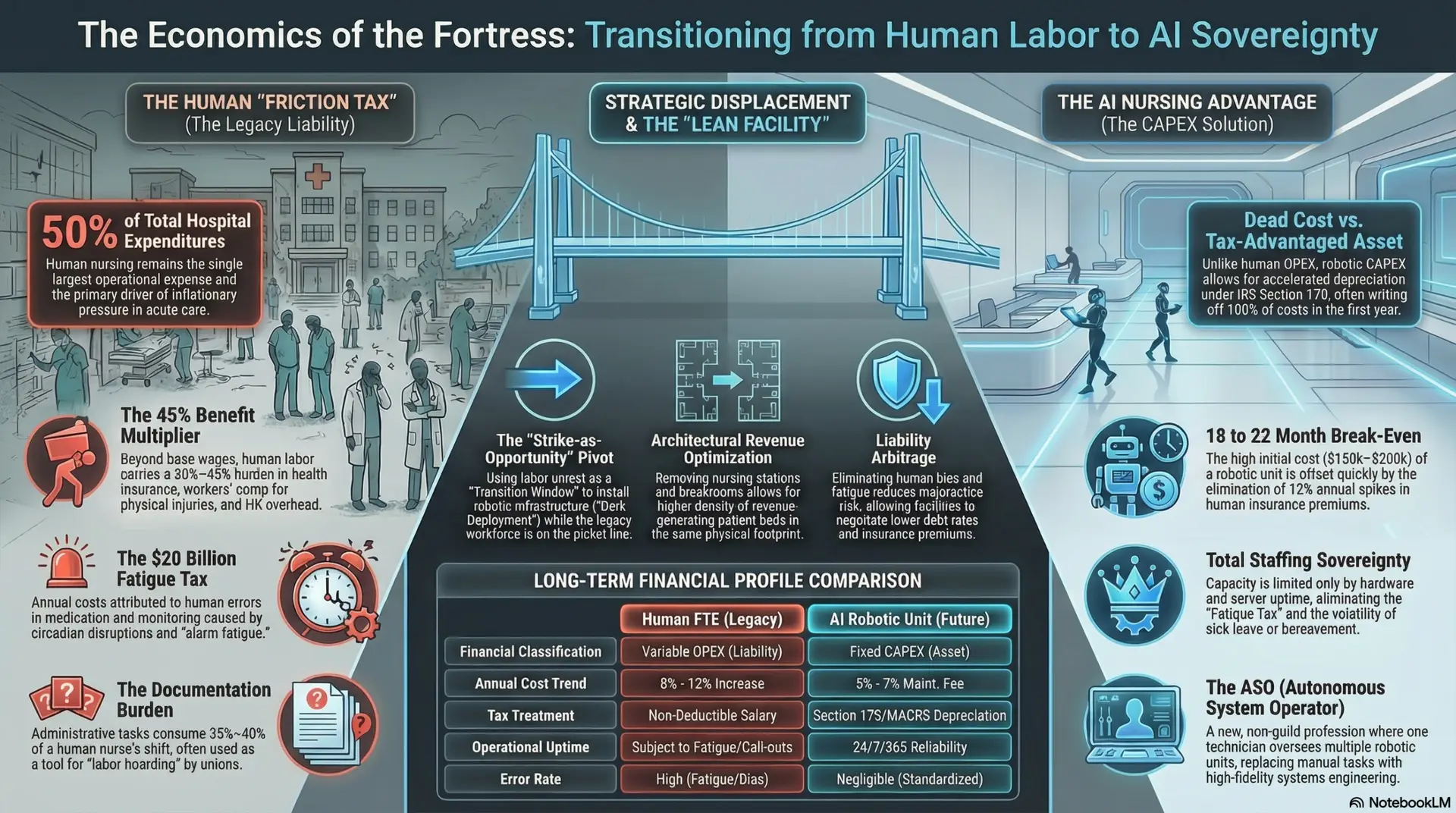
The Economics of the Fortress: Breaking Institutional Friction in Nursing
Author: Jude Chartier RN / AI Nurse Hub Date: March 30, 2026

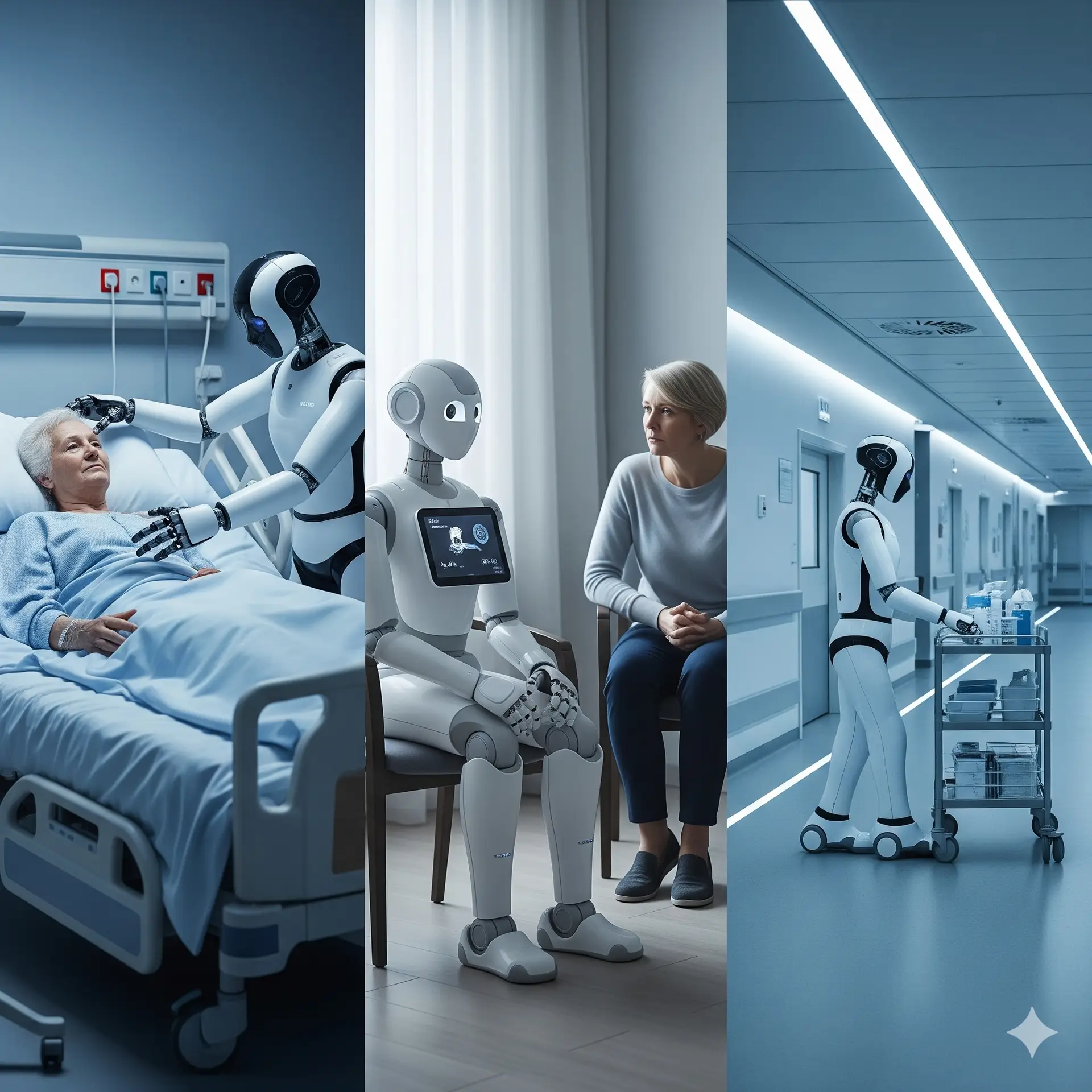
By:Jude Chartier RN / AI Nurse Hub
Date: January 28, 2026
Abstract
The 2026 healthcare landscape is defined by the rapid integration of general-purpose humanoid robotics into acute and long-term care settings. This transition addresses two critical failures in the healthcare ecosystem: the unsustainable physical and administrative burden on nursing staff and the escalating labor costs coupled with chronic staffing shortages facing hospital administration. By utilizing humanoids such as the AgiBot A2 for logistics and the Unitree G1 for safety observation, healthcare systems are reclaiming significant clinical hours and drastically reducing musculoskeletal injury rates. This article evaluates the dual-impact of these technologies—focusing on time reclamation and professional satisfaction for the staff nurse and return on investment (ROI) and operational stability for the administrator—while examining the future trajectory of “Socially Aware” robotic projects and the evolving role of the nurse as a strategic orchestrator.
Introduction: The Dawn of Physical AI in Clinical Practice
As of early 2026, the arrival of the “Physical AI” reasoning layer, specifically NVIDIA’s Isaac GR00T platform, has transformed robotics from rigid, programmed machines into autonomous clinical partners. For the first time, humanoids can reason through “unstructured” environments—navigating crowded hallways, avoiding dynamic obstacles like moving stretchers, and responding to unpredictable patient movements with near-human agility (Counterpoint Research, 2026). This technological leap is facilitating a paradigm shift: the move from task-based nursing to a model of “Strategic Clinical Orchestration.”
This evolution is not merely about replacing human labor but about decoupling the professional nurse from the physical drudgery that has historically characterized the profession. In the 2026 ward, the humanoid serves as the “embodied interface” of the hospital’s intelligence, performing the heavy lifting and logistical runs that previously consumed nearly half of a clinician’s cognitive and physical energy. As the industry moves toward mass-market production of these units, the question for hospital leadership is no longer whether to adopt robotics, but how quickly they can integrate these agents to stabilize their workforce.
The Staff Nursing Perspective: Reclaiming the “Golden Hours”
For the frontline staff nurse, the primary benefit of humanoid implementation is the total elimination of “errand fatigue.” Research indicates that bedside nurses in traditional units spend between 15% and 20% of their 12-hour shifts on non-value-added walking, often referred to as “the runner” role—tasks that include fetching supplies, delivering labs, or searching for equipment (SullivanCotter, 2026).
Eliminating Menial Labor and Burnout
By deploying logistics-focused humanoids like the AgiBot A2, facilities can automate the retrieval of pharmacy deliveries, lab samples, and linens. According to recent clinical data, this automation recovers approximately 2.5 hours per shift for direct patient care. This time, often referred to as the “Golden Hours,” allows nurses to reinvest in high-acuity interventions, complex medication titration, and critical patient education. As one pilot report from a high-volume surgical unit noted, “The ability to remain at the bedside during a critical titration because a robot handled the pharmacy run is a fundamental shift in nurse safety and patient outcomes. We are no longer choosing between logistics and life-saving” (Google Cloud, 2025).
Musculoskeletal Safety and Professional Longevity
Beyond time, humanoids address the physical toll of nursing, which has long been a leading cause of premature retirement and disability. Back injuries remain the leading cause of turnover in the profession, with the cumulative strain of turning and repositioning patients often leading to chronic injury. The implementation of high-torque humanoids like the Fourier GR-1 for patient repositioning (q2h turns) and bed-to-chair transfers removes the physical risk from the clinician. By delegating the “heavy lifting” to a machine that performs with 100% consistency and zero fatigue, nurses can extend their clinical careers, maintaining the human touch in care without sacrificing their own physical well-being.
The Administrative Perspective: Fiscal Stability and Staffing ROI
Hospital administrators face a different, albeit related, set of pressures: the “Double Crisis” of escalating labor costs and declining staff retention. Humanoids provide a unique capital expenditure (CapEx) solution to what has traditionally been an unmanageable operational expense (OpEx).
Labor Cost Displacement and the “Sitter” Model
The financial case for humanoids is most immediate in the “Sitter” model. A traditional 1:1 human sitter for a high-fall-risk patient or a patient with hospital-induced delirium costs a facility approximately $192,720 annually, factoring in benefits, training, and shift differentials. In contrast, the Unitree G1 humanoid, with a breakthrough unit cost of $16,000, represents a total first-year investment of roughly $21,000 when including maintenance and software licensing. Administrators can realize a return on investment within two months of displacing a single 24/7 sitter position. By scaling this across a 500-bed facility, the savings move from the thousands into the millions, providing the capital necessary to reinvest in higher salaries for the specialized nursing staff.
Mitigating the “Hidden Costs” of Turnover
The American Hospital Association (AHA) estimates the direct and indirect costs of a single nursing back injury at nearly $97,000, while the cost of replacing a single Registered Nurse (RN) due to burnout averages between $60,000 and $100,000 (AHA, 2025). For a mid-sized facility, reducing these injuries and the subsequent turnover by even 40% through robotic mobility assistance results in a massive stabilization of the bottom line. “When we view humanoids as a safety infrastructure rather than a luxury, the ROI becomes undeniable,” states a SullivanCotter economic brief. “The robot pays for itself in avoided injuries alone” (SullivanCotter, 2026).
Reliability: A Workforce That Always Shows Up
A critical, often overlooked advantage of humanoid technology is the inherent reliability and predictability of the “workforce.” Unlike human staff, robots do not experience burnout, do not require family leave, and—most importantly—do not “call out” for shifts. In an era where 1 in 5 nurses leaves the profession within the first two years of licensure, humanoids provide a predictable baseline of logistical support that simplifies staffing ratios and bed management.
“Humanoids ensure that the supply chain of the nursing unit never breaks,” states a report on hospital throughput. “A robot does not get tired during the 11th hour of a shift, and its accuracy in delivery remains constant” (SullivanCotter, 2026). For a Nursing Supervisor, knowing that 100% of the logistical and sitter tasks are covered by a robotic fleet that is “always on” allows for much more precise human staffing. Administrators no longer have to over-hire or rely on expensive travel agencies to cover the “logistical gaps” that occur when human staff are stretched thin.
Current Tech and Future Horizons: From Assistance to Empathy
Available Technology (2026) The current market is dominated by three major players that have moved from the “Innovation Lab” to the “Clinical Floor”:
Future Projects: The Neuromorphic Shift and Social Awareness Looking ahead, current research projects are focused on Neuromorphic Empathy. Unlike simple voice assistants, “Socially Aware” humanoids are being designed to mirror human facial expressions and modulate vocal cadences to build subconscious rapport with patients. Future iterations of the Fourier GR-3 are expected to include multimodal emotion recognition (MER), allowing the robot to detect subtle signs of patient distress, pain, or delirium through facial micro-expressions and vocal pitch analysis before a human clinician even enters the room.
Theoretically, the next decade will see “Specialist Humanoids” moving into autonomous clinical procedures. This includes projects focused on autonomous wound debridement and sterile dressing changes. These robots would perform the task with sub-millimeter precision under the remote, high-level supervision of a Wound Care Certified (WCC) nurse, who “authenticates” the plan from a centralized command center.
The Strategic Authenticator Role: A New Professional Identity
To realize these benefits, the nursing role must evolve from a “performer of tasks” to a Strategic Authenticator. In this 2026 professional model:
Conclusion: The Symbiosis of Tech and Touch
The integration of humanoid robotics into acute care represents a historic win-win for the healthcare ecosystem. Staff nurses are liberated from the physical and administrative drudgery that leads to moral injury and burnout, while administrators achieve a level of fiscal and staffing stability previously thought impossible. As technology moves from simple assistance to “Intelligent Caring,” the facilities that embrace this augmented model will inevitably become the preferred employers for the next generation of nursing professionals. In 2026, the best nurse is not the one who works the hardest physically, but the one who strategically deploys technology to ensure the most compassionate and precise patient outcome.
References
American Hospital Association. (2025). Redefining safety: The economic impact of clinical technology and nurse retention. AHA Press.
Counterpoint Research. (2026). CES 2026 robotics recap: The rise of general-purpose humanoids and Physical AI.
Google Cloud. (2025). Nurse handoff: Reclaiming 10 million hours with MedLM and agentic AI.
https://www.google.com/search?q=https://cloud.google.com/transform/nurse-handoff-ai
SullivanCotter. (2026). The economic impact of AI and robotics in healthcare operations: Labor stability in the augmented hospital.
https://www.google.com/search?q=https://sullivancotter.com/ai-robotics-healthcare-2026
Author: Jude Chartier RN / AI Nurse Hub Date: March 30, 2026
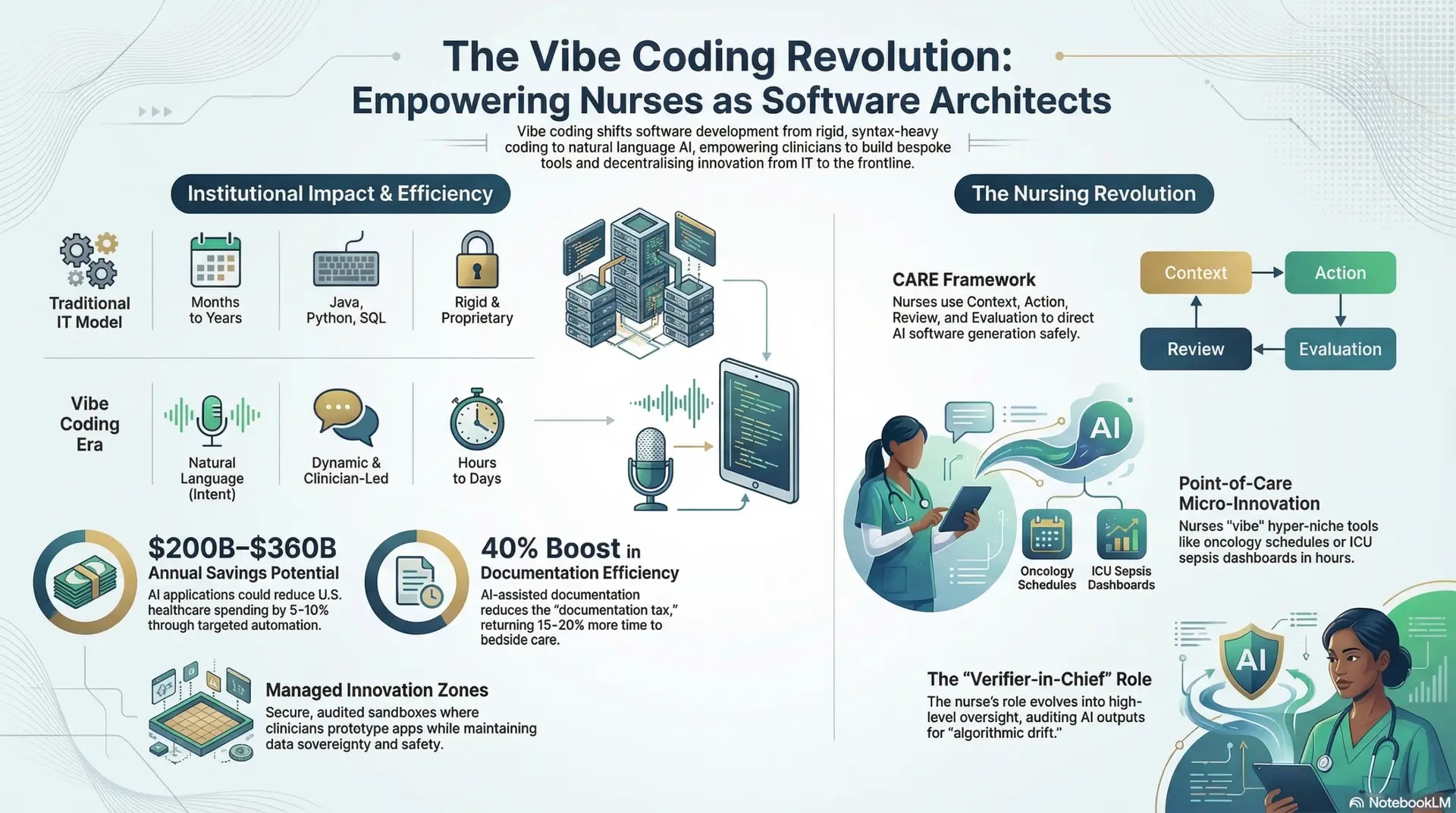
By: Jude Chartier RN / AI Nurse Hub Date: March 23, 2026
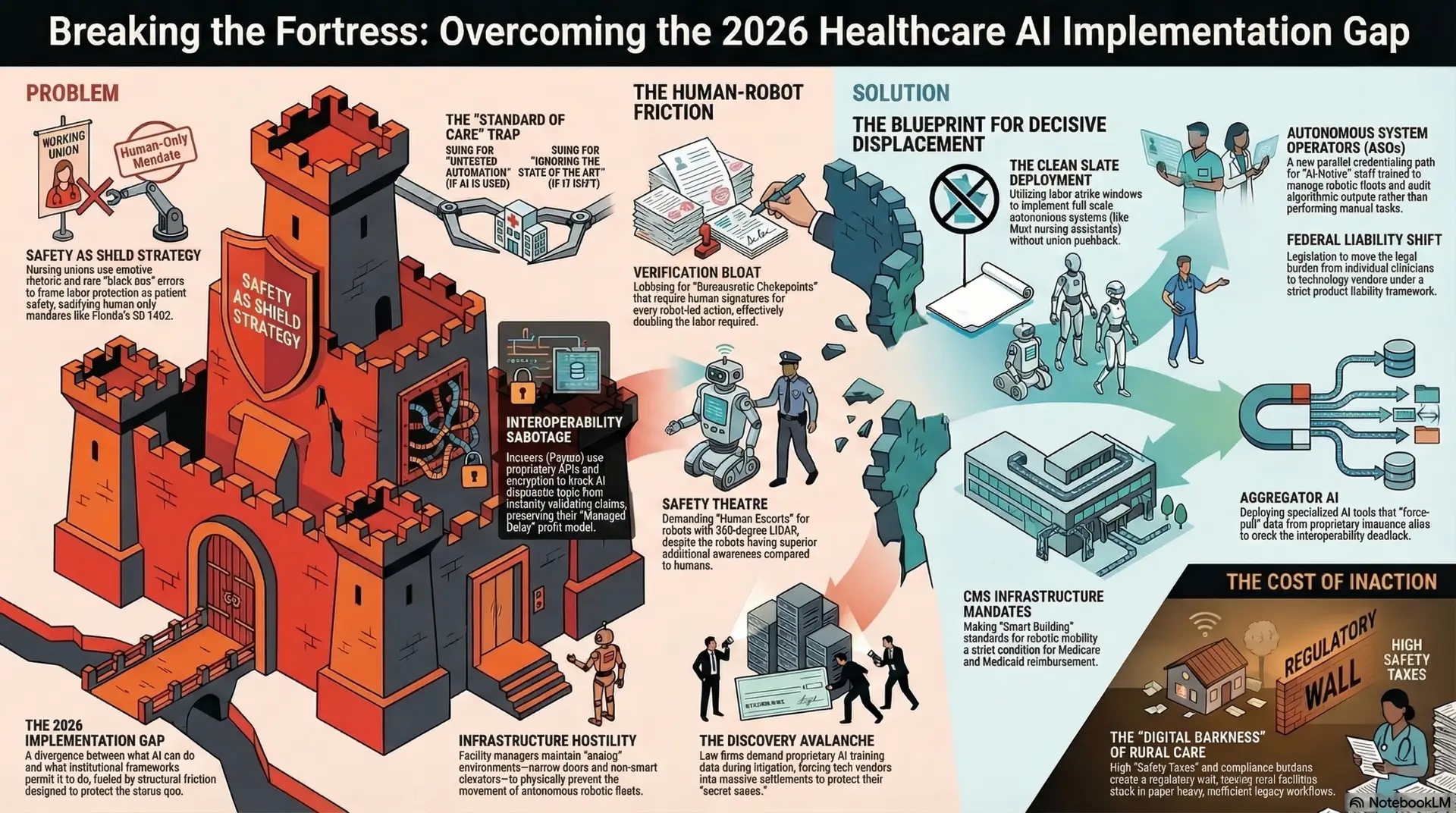
By: Jude Chartier RN / AI Nurse Hub Date: March 19, 2026