Date: January 5, 2026
By: Jude Chartier [AI Nurse Hub]
By early 2026, the integration of generative artificial intelligence into healthcare has moved from theoretical discussions to practical application, particularly in the realm of clinical documentation. Technologies such as ambient listening, which automatically drafts clinical notes based on patient-provider interactions, promise to alleviate the staggering documentation burden that has historically contributed to clinician burnout. However, widespread adoption across nursing units has been hindered by a critical barrier: trust. Generative AI models, while powerful, are notorious for their potential to “hallucinate,” confidently generating plausible but factually incorrect medical information. The introduction of Stanford University’s VeriFact system represents a pivotal technological breakthrough designed to bridge this trust gap, transforming AI from a potentially unreliable drafting tool into a verifiable clinical assistant.
To understand the significance of VeriFact, it is essential to understand the concept of “grounded” AI. Traditional Large Language Models (LLMs) generate text based on probabilistic patterns learned during their training; they predict the next most likely word without necessarily understanding factual accuracy. This can lead to ungrounded outputs, or hallucinations, where the AI invents lab values or medical histories. VeriFact functions as a grounding mechanism. It employs a “decompose-and-verify” strategy, breaking down long, complex AI-generated narratives into individual, atomic claims. It then rigorously cross-references each specific claim against a trusted “source of truth,” such as the patient’s structured Electronic Health Record (EHR) data (Yu et al., 2025). In essence, if an ungrounded AI is an improvisational actor, VeriFact is the meticulous auditor, ensuring every statement is backed by verifiable evidence within the chart.
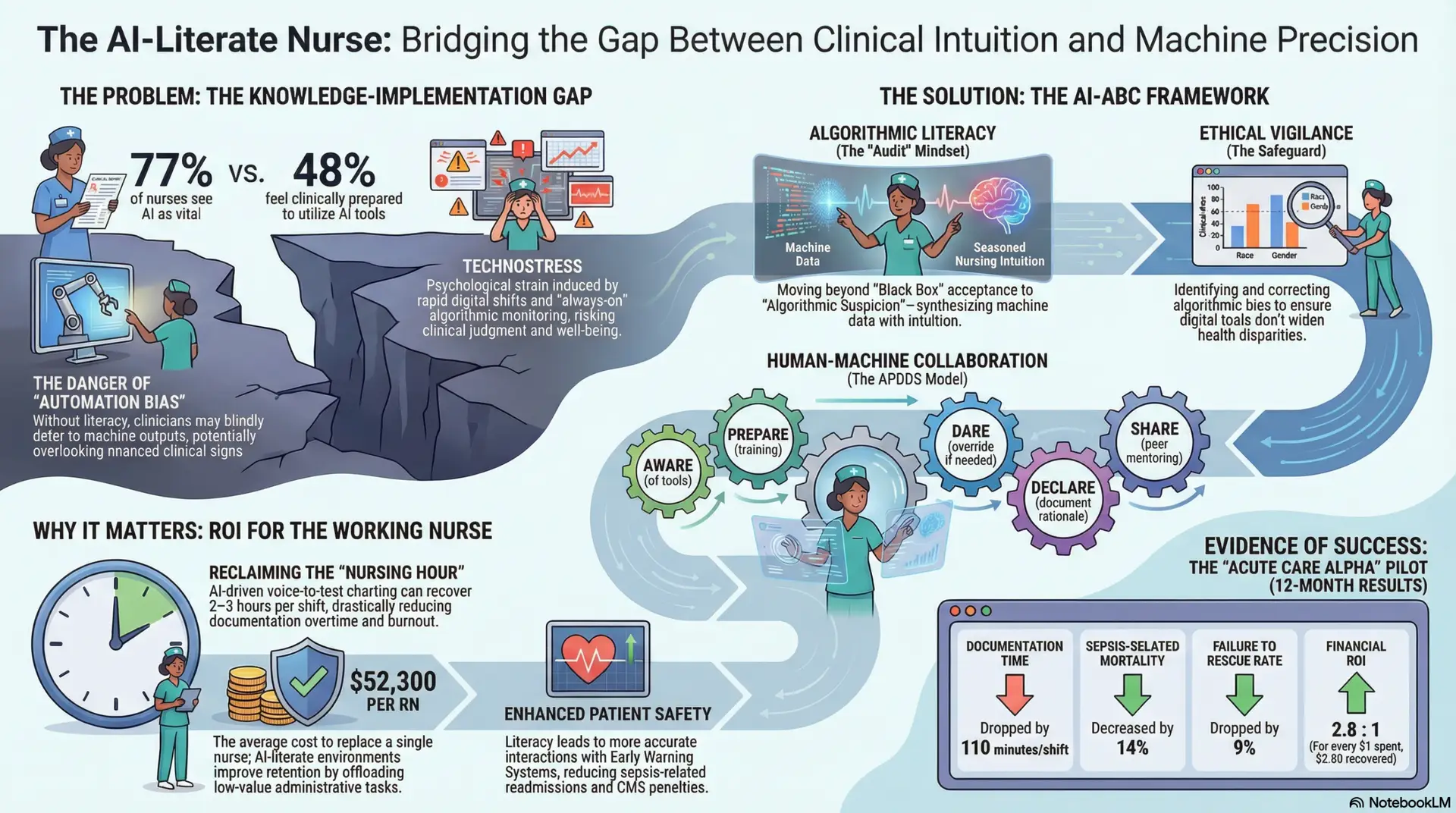
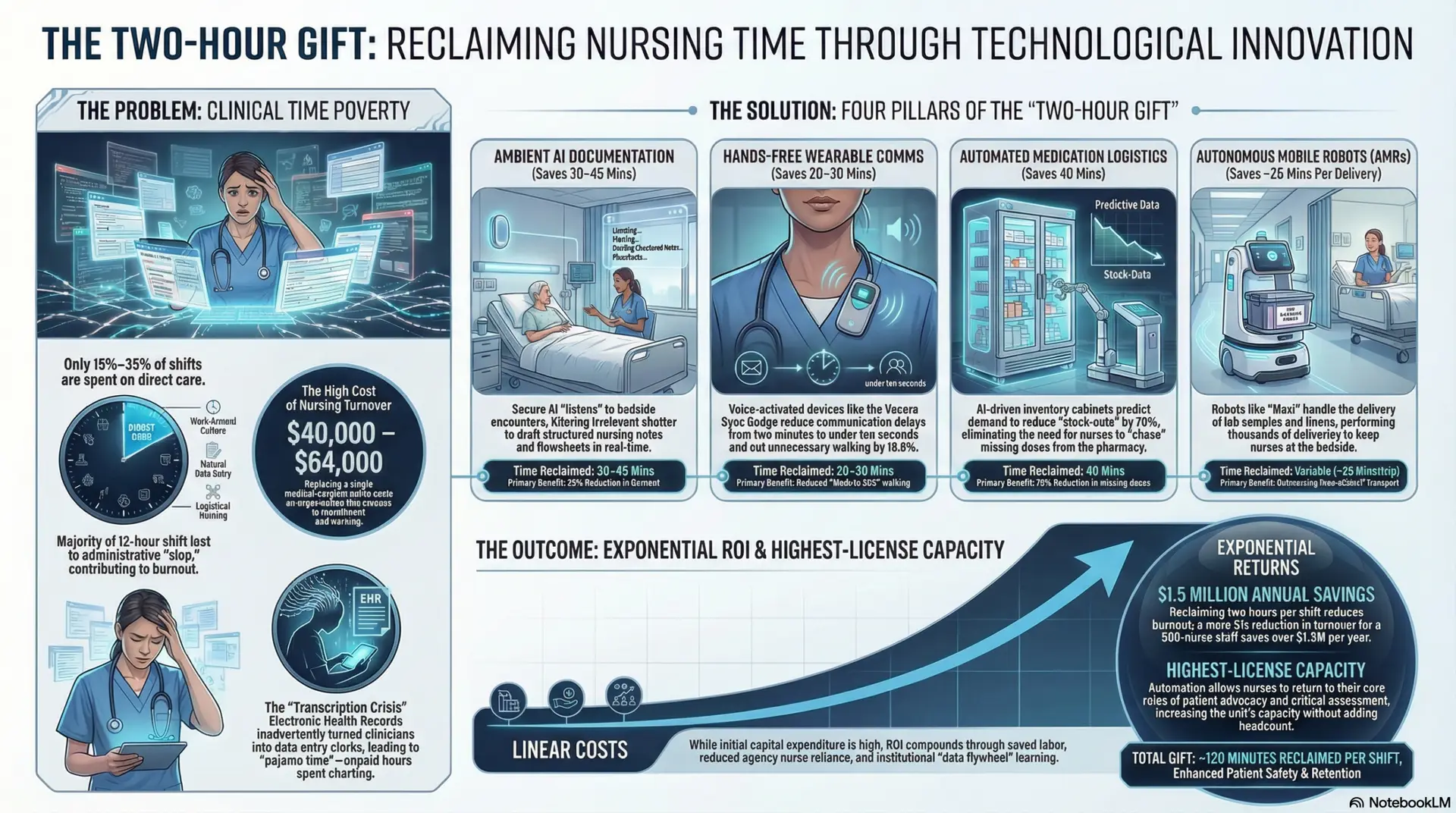
The deployment of grounded systems like VeriFact holds profound implications for the nursing workflow, primarily by shifting the nurse’s role from authoring to auditing. The cognitive load associated with manual documentation is immense; studies have long established that nurses spend significant portions of their shifts on data entry rather than direct patient care, a major driver of occupational fatigue (Melnyk et al., 2023). By utilizing an ambient AI to draft a discharge summary, followed by VeriFact to automatically verify its accuracy against the EHR, the nurse is freed from the mundane mechanics of typing. Instead, the nurse performs a high-level final review, validating the synthesized information. This technological synergy does not replace nursing judgment but rather clears the administrative debris that obstructs it, allowing more time for complex critical thinking and patient interaction.
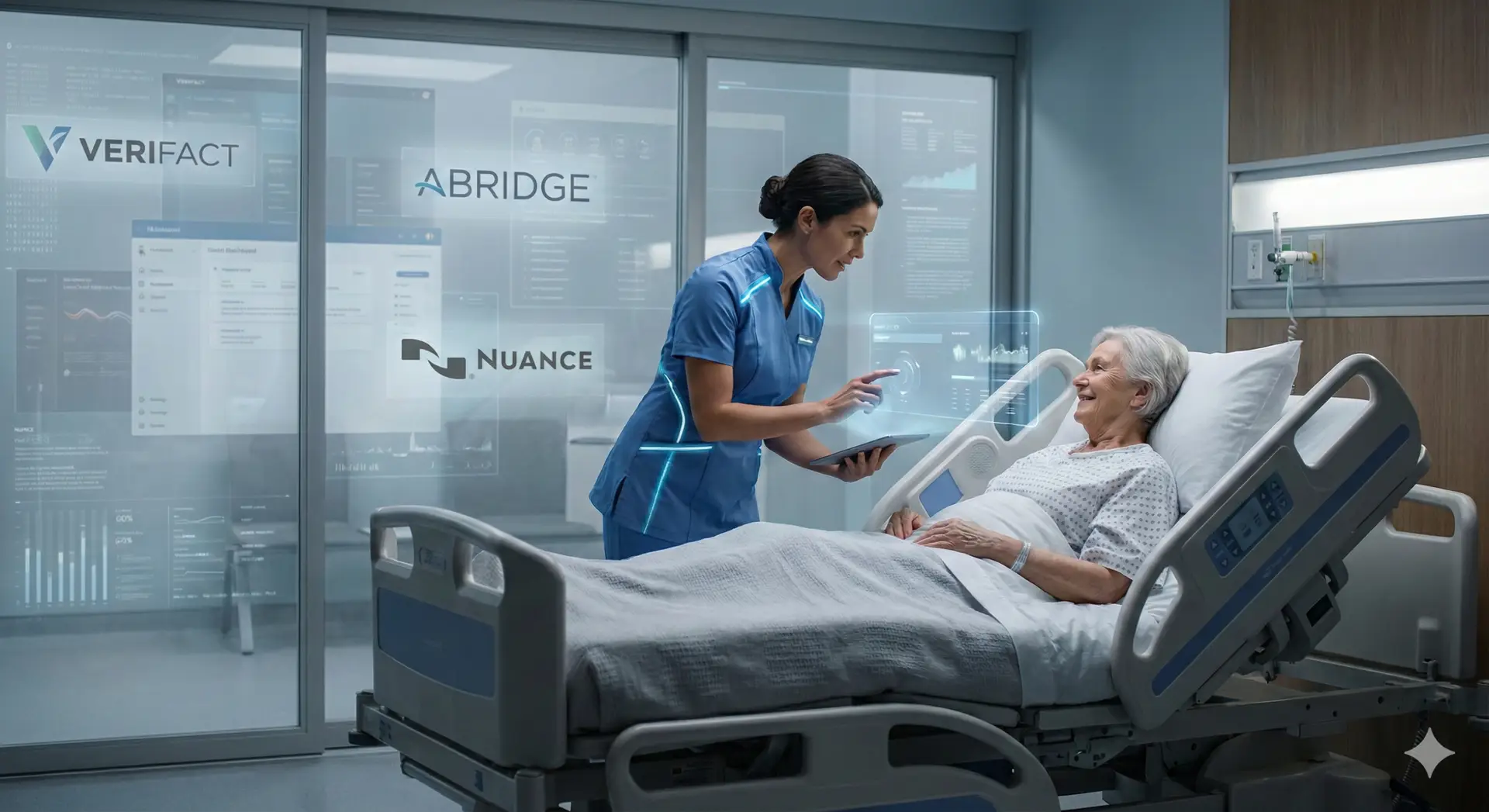
Stanford is not alone in this pursuit; the industry is rapidly consolidating around the “Grounded AI” standard. Major competitors such as Abridge and Nuance (Microsoft) are deploying their own verification engines, such as Abridge’s “Linked Evidence” framework, which maps every AI-generated sentence back to specific audio timestamps and transcript segments for instant nurse verification (Abridge, 2025). Similarly, Ambience Healthcare recently launched its “Conditions Advisor,” an agentic tool that cross-references live clinical conversations with longitudinal EHR data to ensure documentation accuracy and suggest potentially missed diagnoses (Ambience Healthcare, 2025). These companies are engaged in an “accuracy arms race,” where the winner is determined by who can provide the most transparent and defensible data to the clinician at the point of care.
While the benefits of efficiency and reduced cognitive burden are compelling, the adoption of VeriFact presents both significant advantages and critical challenges that require astute management. The primary advantage is enhanced consistency and accuracy in documentation. Recent evaluations indicate that VeriFact achieves a higher agreement rate with expert clinicians than clinicians achieve with one another when verifying medical records, offering a standardized layer of safety against human error caused by fatigue (Yu et al., 2025). However, a significant “con” resides in the potential for automation bias, where clinicians may become over-reliant on the system’s verification ticks and cease performing critical independent checks. Furthermore, VeriFact relies entirely on the integrity of the EHR as its source of truth. If erroneous data was previously entered into the EHR by a human, VeriFact will validate subsequent outputs based on that error, reinforcing the adage of “garbage in, garbage out” (Tang et al., 2024).
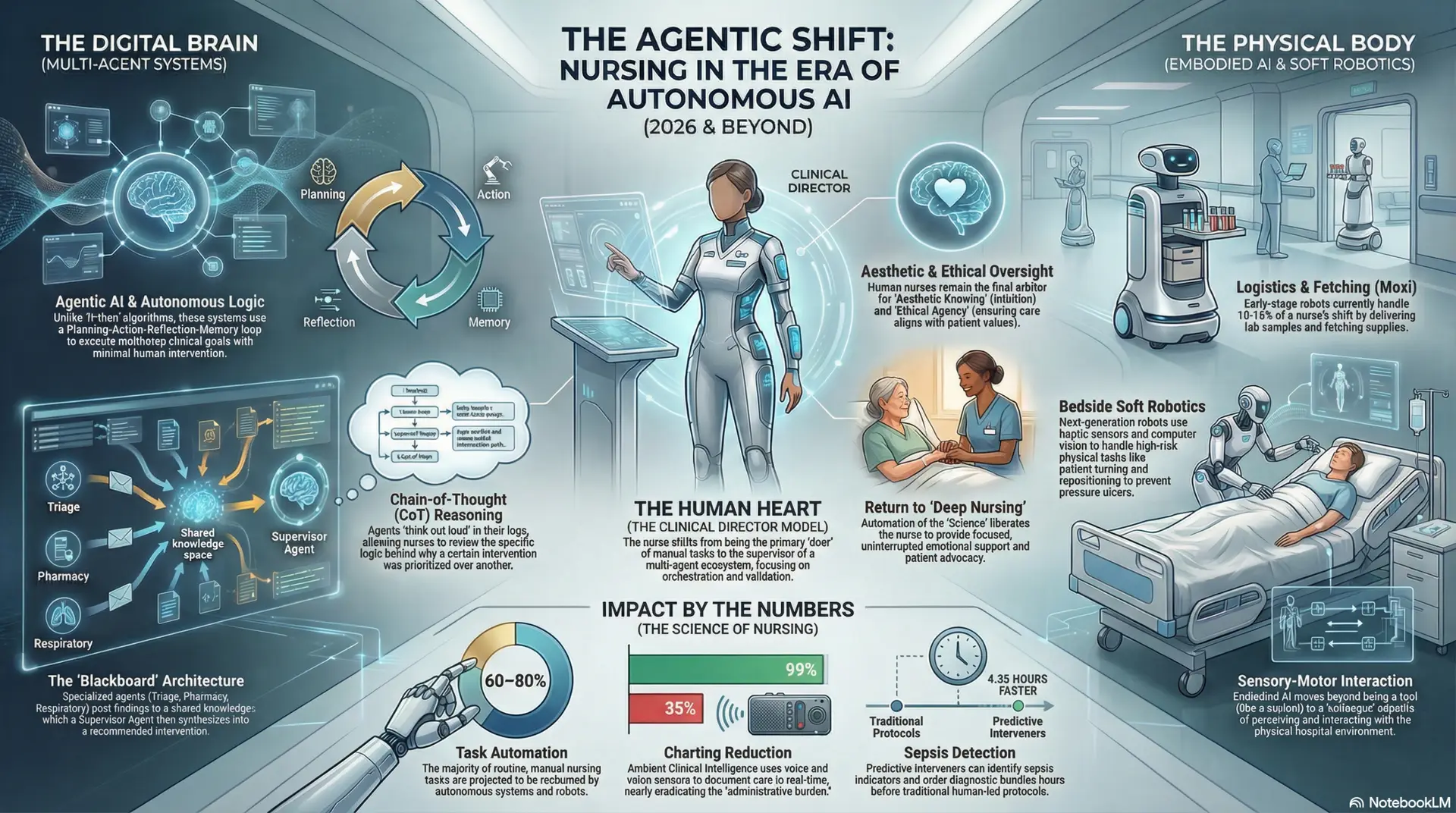
Ultimately, as these verification technologies are perfected and integrated as standard hospital infrastructure, the “legitimate” reasons for nurses to mistrust AI will diminish. When a system can prove its work with 99% accuracy and provide a direct link to the supporting evidence in the chart, it moves from a liability to an indispensable asset. However, even in a perfected state, the nurse must remain the final gatekeeper. The AI can verify that a note matches the data, but it cannot verify if the data itself reflects the subtle, human nuance of the patient’s condition that only a nurse can perceive. In the era of the Fleet Commander, the technology handles the verification, but the nurse provides the validation.
References
Abridge. (2025). Transforming clinical documentation with advanced AI. https://www.abridge.com/ai
Ambience Healthcare. (2025, November 3). Ambience Healthcare launches AI-powered “Conditions Advisor” to support comprehensive inpatient documentation. https://www.ambiencehealthcare.com/blog/ambience-healthcare-launches-ai-powered-conditions-advisor
Melnyk, B. M., Houser, J., Teall, A. M., Padgett, L., & Heinze, K. (2023). The state of well-being and quality of care in healthcare: A systematic review and meta-analysis. Worldviews on Evidence-Based Nursing, 20(5), 412-426. https://doi.org/10.1111/wvn.12678
Tang, C., Plasek, J. M., & Bates, D. W. (2024). Rethinking patient safety in the era of generative artificial intelligence. Joint Commission Journal on Quality and Patient Safety, 50(3), 189-191. https://doi.org/10.1016/j.jcjq.2023.12.005
Yu, H., Acosta, J. N., & Topol, E. J. (2025). VeriFact: A framework for verifying clinical narratives generated by large language models against electronic health records. Nature Medicine, 31(1), 112-125. https://doi.org/10.1038/s41591-024-02987-z