Date: January 5, 2026
By: Jude Chartier [AI Nurse Hub]
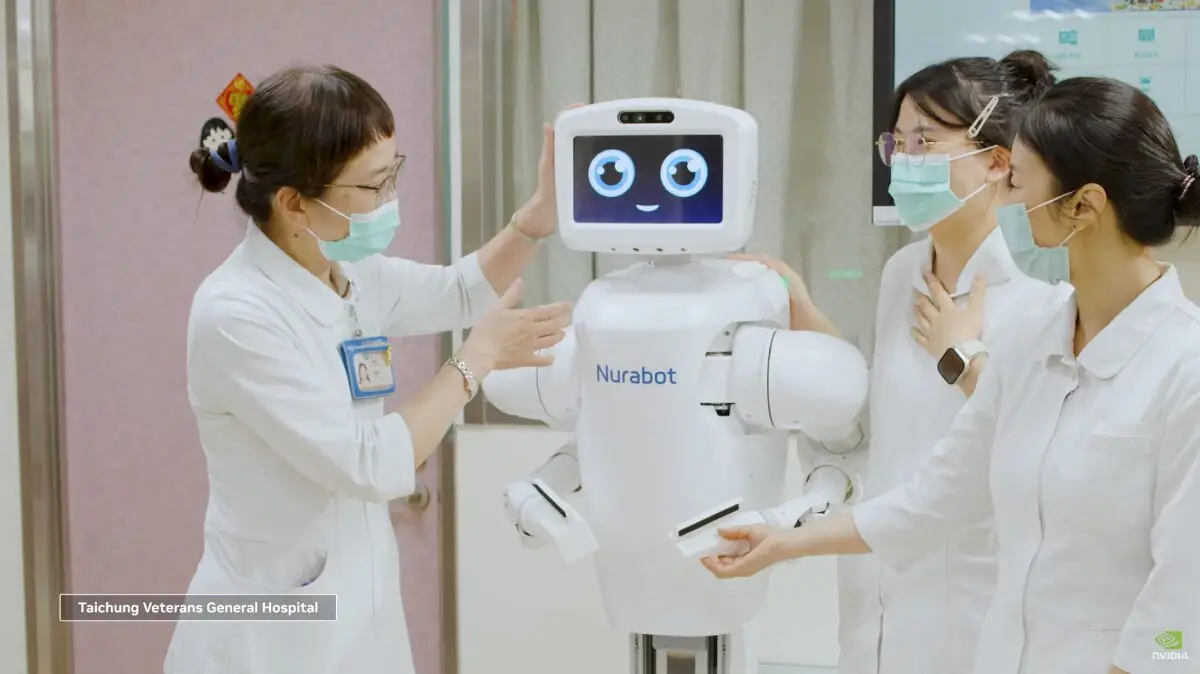
The nursing profession has reached an inflection point in 2026, where the integration of advanced technology is no longer optional but essential for operational survival. The recent commercial launch of the Nurabot, following its extensive pilot program at Taichung Veterans General Hospital (TVGH) in Taiwan, offers a tangible case study for this transition. Developed through a high-profile partnership involving Foxconn, NVIDIA, and Kawasaki Heavy Industries, the Nurabot is an autonomous mobile robot designed specifically for the clinical environment (NVIDIA, 2025). For the staff nurse on the floor, the arrival of such technology often elicits a complex mix of skepticism and cautious optimism. However, an analysis of the pilot data and workflow implications suggests that while implementation hurdles exist, the operational benefits of the Nurabot—specifically in ameliorating physical labor and cognitive load—significantly outweigh the drawbacks, ultimately fostering acceptance among frontline staff.
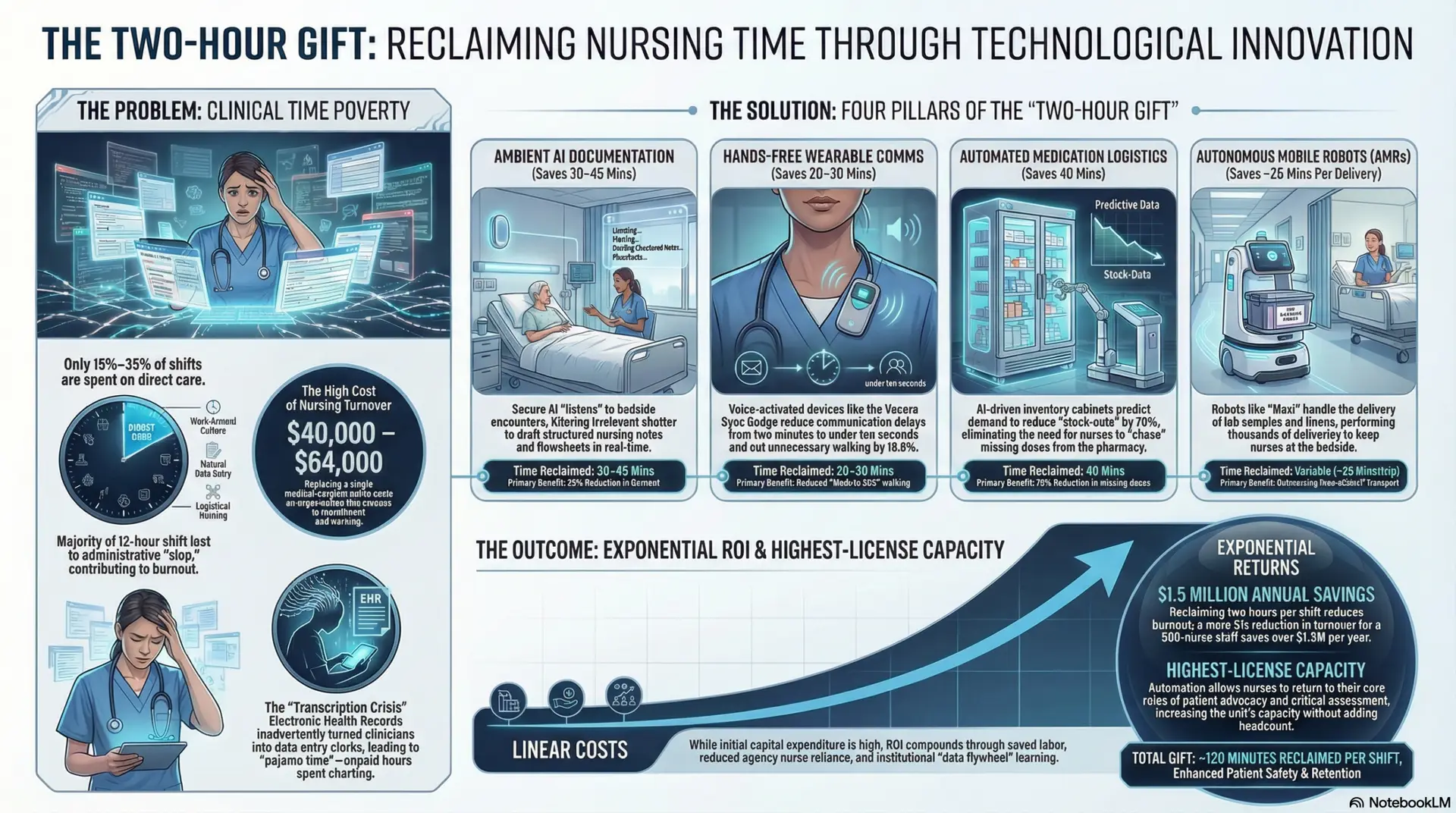
The primary argument favoring the adoption of robots like Nurabot centers on the significant reduction of non-value-added physical labor. Nursing has historically been characterized by heavy logistical burdens, including fetching supplies, transporting specimens, and delivering medications, tasks that contribute little to clinical judgment but heavily to physical fatigue. The pilot at TVGH demonstrated that the Nurabot could autonomously navigate elevators and secure hospital corridors, effectively taking over these repetitive delivery tasks. Data from the pilot suggested a potential workload reduction of up to 30% for nursing staff by offloading these logistical duties (Foxconn, 2025). Scholarly research on nursing workflows supports the critical nature of this offloading. Studies have consistently shown that minimizing time spent on indirect care tasks directly correlates with increased time for direct patient assessment and critical thinking, which are the core competencies of professional nursing (Prest et al., 2023). By delegating the “fetch and carry” operations to a robotic unit, the nurse is physically conserved for bedside tasks that require human dexterity and presence.
Beyond the physical benefits, the cognitive advantages of integrating delivery robots are substantial. Modern nursing is plagued by constant interruptions and cognitive fragmentation, often driven by immediate, low-level logistical needs—such as realizing a room is missing linens or a stat specimen needs transport to the lab. These interruptions break the nurse’s chain of thought during complex clinical tasks, increasing the risk of errors. The Nurabot addresses this by serving as an on-demand runner. The ability to dispatch a robot for a missing item without leaving the patient’s bedside preserves the nurse’s “cognitive bandwidth.” Literature regarding technology adoption in healthcare indicates that perceived usefulness—specifically, technology that makes the job easier rather than adding complexity—is the strongest predictor of staff acceptance (Gao et al., 2024). When a nurse realizes that the robot is not a competitor but a tool that reduces mental clutter, acceptance grows rapidly.
Conversely, it would be disingenuous to ignore the cons, primarily involving immediate workflow disruption and the necessity of trust. Introducing an autonomous agent into a high-stakes environment like a medical-surgical ward requires a significant adjustment period. Staff nurses in pilots often report initial frustration with the “learning curve” of the new interface and occasional navigational errors by early-stage robots, which can temporarily increase, rather than decrease, frustration. Furthermore, a foundational barrier to adopting artificial intelligence and robotics in nursing remains a lack of trust in the technology’s reliability and safety around vulnerable patients (Shorey et al., 2023). Nurses are ethically bound to ensure patient safety, and relinquishing any task to a machine requires evidence that the robot will not commit errors, such as delivering the wrong medication bin or colliding with a patient. The success of the Nurabot relies heavily on its NVIDIA-powered “digital twin” training, which simulates hospital environments to ensure safe navigation before deployment (NVIDIA, 2025), but frontline staff must experience this reliability firsthand to overcome their initial hesitation.
In conclusion, the Nurabot pilot demonstrates that the transition to a robotic-integrated ward is not without its friction points involving trust and initial workflow adaptation. However, the prevailing evidence suggests these are temporary hurdles rather than permanent barriers. The existential crisis of modern nursing is one of capacity; there are simply too many physical tasks for the available human hands. By successfully offloading high-volume, low-skill logistical burdens, the Nurabot proves its value not as a replacement for the nurse, but as an essential force multiplier. The data indicates that once nurses experience the reality of a shift with 30% less logistical running, the robot ceases to be seen as an intruder and is accepted as a necessary member of the clinical fleet.
References
Foxconn. (2025, November 20). Foxconn’s healthcare robot to revolutionize patient care [Press release]. https://www.foxconn.com/en-us/press-center/events/industry-events/1858
Gao, X., Li, J., & Xie, Q. (2024). Factors influencing nurses’ acceptance of service robots in hospitals: A cross-sectional study based on the technology acceptance model. Journal of Nursing Management, 32(1), 112-122. https://doi.org/10.1111/jonm.13905
NVIDIA. (2025, June 3). Foxconn taps NVIDIA to accelerate healthcare robotics. NVIDIA Blog. https://blogs.nvidia.com/blog/foxconn-smart-hospital-robot/
Prest, M., Enekwizu, U., & Pappas, S. (2023). The relationship between nurse staffing and missed nursing care: A systematic review. Journal of Nursing Regulation, 14(1), 45–55. https://doi.org/10.1016/S2155-8256(23)00068-7
Shorey, S., Ang, E., & Yap, J. (2023). Perceptions of nurses toward the use of robots in healthcare: A systematic review. Computers, Informatics, Nursing, 41(7), 477-486. https://doi.org/10.1097/CIN.0000000000000953