By: Jude Chartier RN / AI Nurse Hub
Date: February 13, 2026
Abstract
As global healthcare systems grapple with an aging population, rising acuity, and a chronic shortage of clinical staff, the role of robotics is evolving from simple logistical support to direct, autonomous patient care. This article examines the feasibility of a fully automated Medical-Surgical (Med-Surg) unit, where perfected robotic systems—equipped with biomimetic tactile sensors and reasoning AI—perform the majority of bedside tasks. We propose a “Human Validation Model,” wherein professional nurses transition from bedside providers to “Clinical Orchestrators” operating from centralized or offsite cockpits. This analysis explores the technical requirements for human-machine parity, the administrative return on investment (ROI) through labor mitigation and revenue integrity, and the irreducible ethical and clinical functions that necessitate continued human oversight in an increasingly automated landscape.
Introduction
The integration of technology into the nursing profession is not a new phenomenon; from the introduction of electronic health records to the deployment of automated medication dispensing cabinets, technology has steadily encroached upon clinical workflows. However, we are approaching what may be termed a “singularity” in clinical care. The rapid advancement of medical robotics, high-fidelity haptic feedback systems, and Agentic Artificial Intelligence (AI) suggests a future where the physical labor of nursing—long considered “rote” and repetitive—can be delegated to machines.
This transition is particularly salient in the Medical-Surgical (Med-Surg) environment. Unlike the highly specialized and unpredictable nature of the Intensive Care Unit (ICU) or the Emergency Department, the Med-Surg floor is characterized by high-volume, standardized procedures: medication administration, hygiene maintenance, wound care, and routine monitoring. This article explores whether a “perfected” robot—one capable of human-level dexterity and reasoning—can effectively replace the bedside nurse. It further argues that while technical and cognitive parity is achievable for task execution, the professional nurse remains an essential component of the care paradigm as a clinical verifier, ethical governor, and human advocate.
The Technical Horizon: The “Perfected” Robotic Nurse
To achieve total bedside automation and gain patient acceptance, robotics must transcend the “cold machine” aesthetic that has characterized industrial automation for decades. The perfected robotic nurse must achieve biomimetic excellence in both form and function.
A. Biomimetic Tactile Systems and Thermal Realism
The primary barrier to robotic nursing has historically been the “dexterity gap.” Human skin is an incredibly complex organ, capable of detecting subtle variations in pressure, temperature, and texture that guide clinical interventions. The perfected robotic nurse utilizes multi-layered synthetic “electronic skin” (e-skin). These membranes are embedded with high-density tactile sensors capable of detecting pressure at a resolution exceeding human fingertips, allowing for the delicate handling of fragile geriatric skin or the precise palpation of an abdominal mass.
Furthermore, internal thermal regulation systems maintain this synthetic skin at a constant $37^\circ\text{C}$ ($98.6^\circ\text{F}$). This thermal realism is a critical psychological component of care. It mitigates the “Uncanny Valley” effect and the “cold machine” rejection response in vulnerable patients. When a robot performs physically intimate care tasks—such as bathing a patient, assisting with toileting, or performing wound debridement—the warmth of the machine provides a life-like and reassuring sensation, fostering a sense of safety that traditional metallic or plastic interfaces lack.
B. The Reasoning Brain: From Predictive to Agentic AI
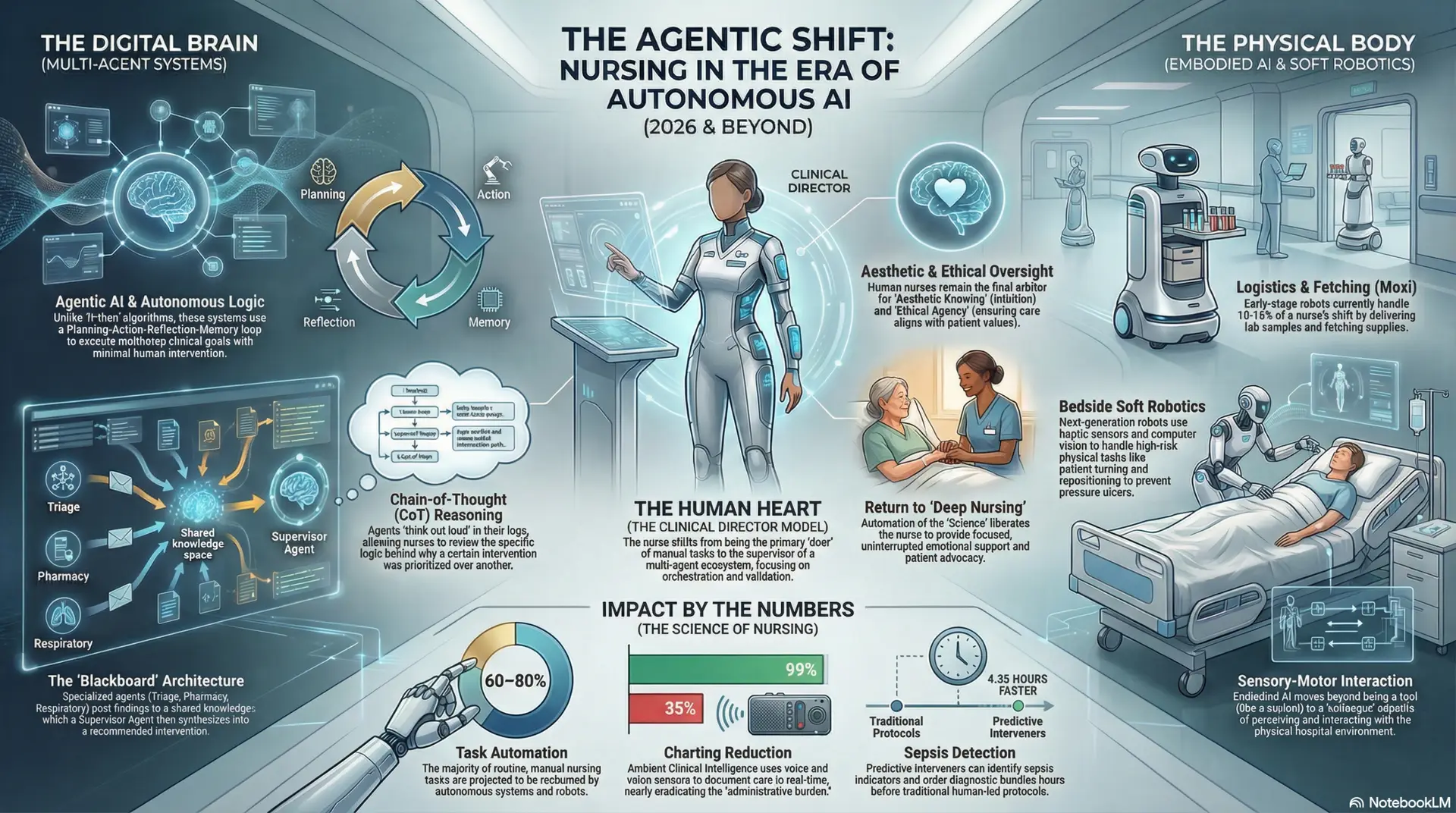
The true paradigm shift occurs with the implementation of Large Reasoning Models (LRMs) and Agentic AI. Traditional medical software operates on “Predictive AI,” which identifies patterns based on historical data but lacks the ability to act independently in a novel context. In contrast, “Reasoning AI” utilizes chain-of-thought processing to handle clinical ambiguity.
An “Agentic” robotic nurse does not merely follow a static rounding schedule. It possesses contextual awareness, using high-resolution computer vision and natural language processing to “read the room.” For example, the robot may independently decide to defer a routine ambulation protocol if it detects subtle signs of patient fatigue—such as a specific pattern of facial grimacing or a slight tremor—even if the patient’s vitals remain within the programmed “normal” range. By correlating these micro-observations with real-time telemetry and EHR history in milliseconds, the robot achieves a level of vigilant monitoring that is physically impossible for a human nurse assigned to a 1:6 ratio.
The Administrative Paradigm: Costs and ROI
For nursing administrators and hospital executives, the transition to a robotic workforce is not merely a clinical innovation but a matter of long-term financial sustainability and revenue integrity.
A. Capital vs. Operational Expenditure: The Labor Mitigation Strategy
The initial Capital Expenditure (CapEx) for a 30-bed Med-Surg unit’s robotic fleet is admittedly astronomical, involving not only the units themselves but the requisite infrastructure: high-bandwidth, low-latency 6G networks, specialized maintenance bays, and redundant power systems. However, the long-term reduction in Operational Expenditure (OpEx) is profound.
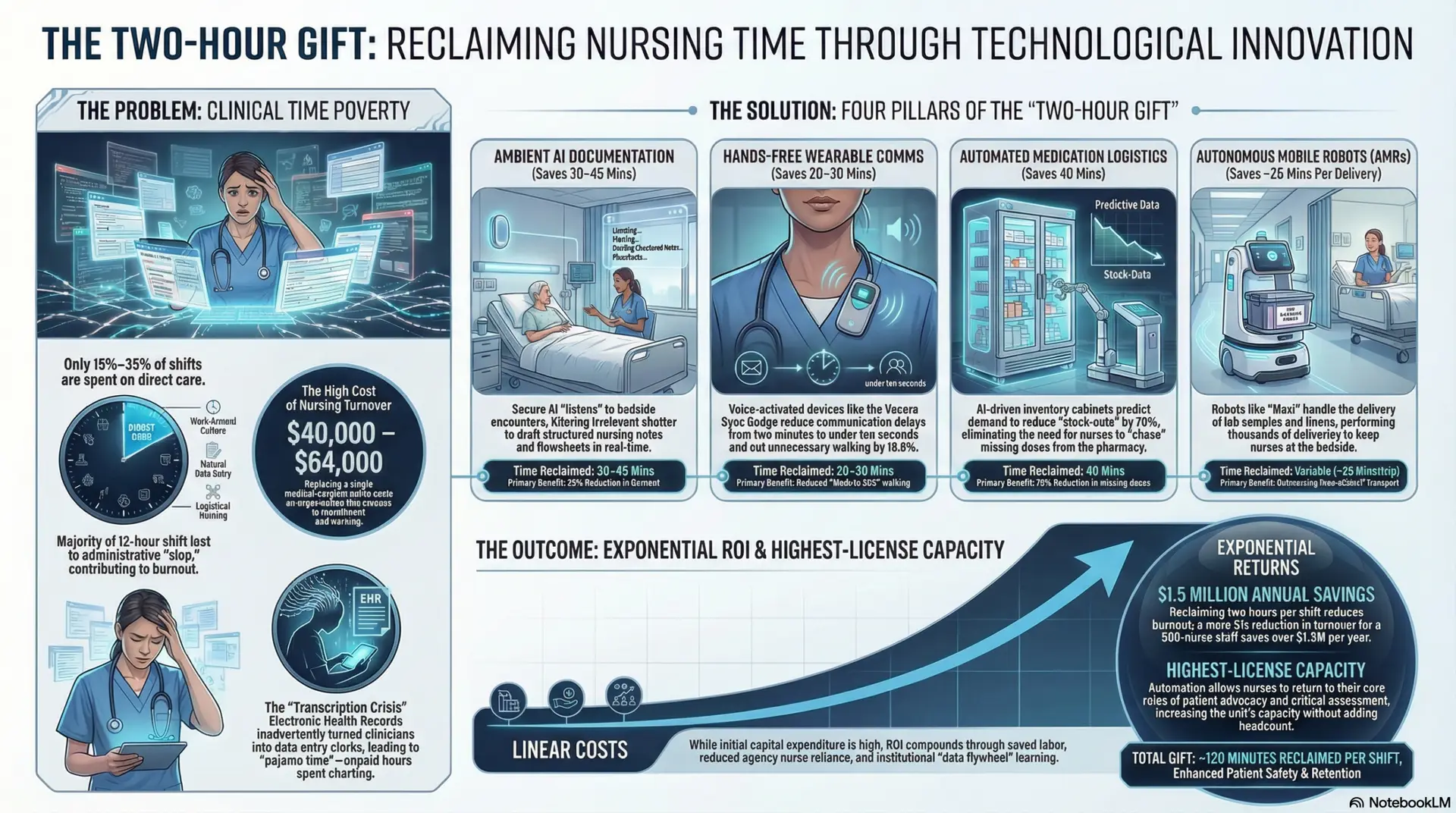
Human labor is the single largest expense in hospital operations. By mitigating costs associated with salaries, health benefits, pension contributions, and the administrative burden of scheduling, hospitals can stabilize their margins. More importantly, robotics eliminates the “hidden costs” of nursing: burnout-related absenteeism, the high cost of supplemental “travel” nursing, and the expensive recruitment cycles necessitated by a turnover rate that currently plagues the profession globally. A robotic fleet does not experience fatigue, does not require shift differentials, and can be “scaled up” during a surge in census without the need for overtime pay.
B. Revenue Integrity: Captured Charges and Error Mitigation
Beyond direct labor savings, robots offer a superior ROI through the precision of “charge capture.” In a human-led environment, revenue leakage is common; nurses often fail to document every supply used or every minor procedure performed due to the sheer pace of the shift. A robotic system, integrated directly into the supply chain and EHR, logs every medication administered, every dressing changed, and every milliliter of output measured with 100% accuracy. This ensures that the hospital captures every cent of reimbursable care.
Furthermore, the ROI is bolstered by the near-elimination of Hospital-Acquired Conditions (HACs), which carry heavy financial penalties under value-based care models. A tireless robotic system can perform micro-repositioning of patients every 15 minutes to prevent pressure ulcers and provide 1-on-1 “virtual sitting” to prevent 100% of unassisted falls. The savings from avoiding just a handful of “never events” per year can offset the maintenance costs of the entire robotic fleet.
The Human Validation Model: The Nurse as “Verifier”
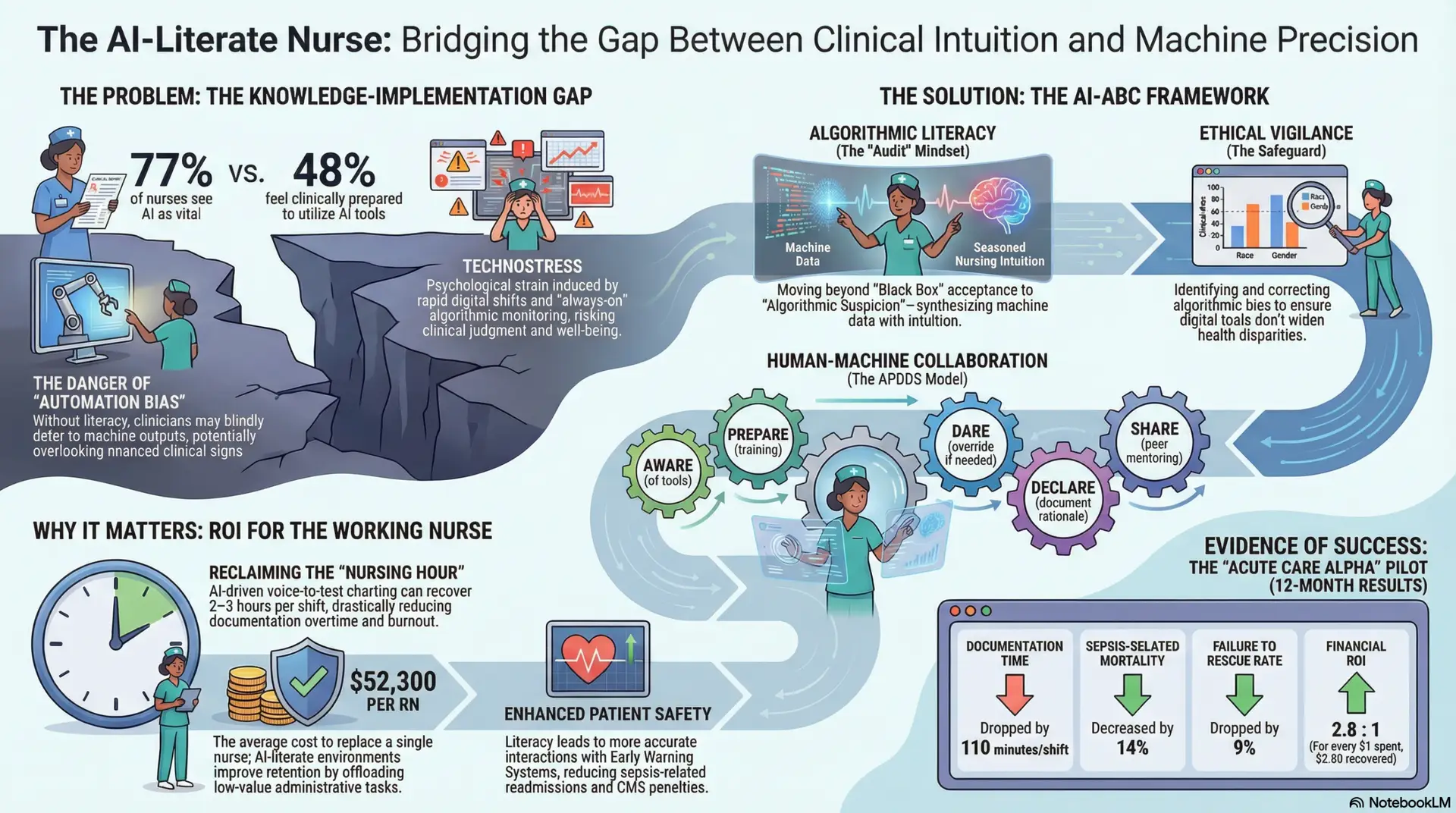
The total automation of a Med-Surg unit does not imply the “end of nursing”; rather, it redefines the nurse’s location, function, and professional identity. In this future state, the nurse moves from being the “doer” of tasks to the “validator” of care.
A. The Centralized Clinical Cockpit and Offsite Oversight
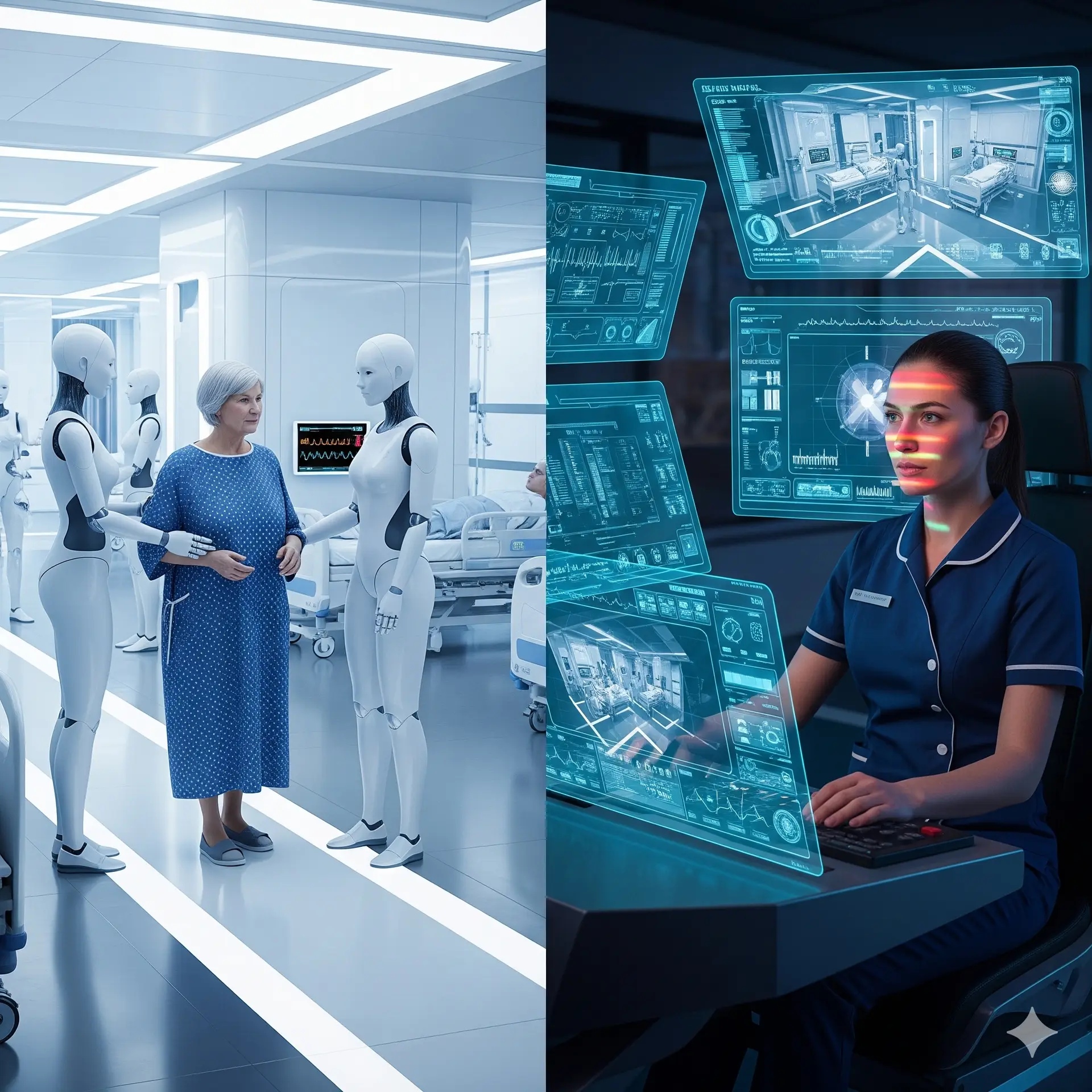
We envision a model where professional nurses operate from a “Centralized Clinical Cockpit.” This hub allows a single expert nurse to oversee the robotic care of an entire floor, or even multiple floors, from a single interface. Advances in secure tele-presence and low-latency data streaming even allow for this oversight to occur from an offsite environment, facilitating a “work-from-home” or “remote-hub” model for nurses who may have physical limitations or who prefer an office-based environment.
This professional acts as the “Clinical Orchestrator,” viewing a “God’s-eye” dashboard that synthesizes the data streams from every robot on the unit. When a robot identifies an anomaly or reaches a logic gate it cannot resolve, it flags the “Verifier” for a human decision.
B. The Machine Learning Maturation Curve
The transition to autonomy is not instantaneous but follows a “Machine Learning Maturation Curve.” Upon first implementation, the “Human-in-the-Loop” protocol requires the robot to seek validation for nearly all interventions—from titrating a drip to changing a complex dressing. However, as the system “learns” the preferences and clinical styles of the verifiers, and as its Reasoning AI matures through millions of successful care cycles, the requirement for human intervention decreases. Over time, the nurse is only alerted for “exceptions”—patients whose physiology or social situation falls outside of standard algorithmic care plans—allowing the professional to focus their high-level cognitive resources where they are most needed.
Socio-Technical Barriers: The Counter-Argument
Despite the technical and financial allure of the “perfected” robot, the nursing profession encompasses elements that are currently considered “irreducible.”
A. The “Black Box” of Clinical Intuition
While AI can synthesize quadrillions of data points, it currently lacks what Patricia Benner described as “expert intuition”—the ability of a seasoned nurse to sense that a patient is “going sour” before any vitals change. This involves the synthesis of subtle environmental cues: the specific scent of a burgeoning infection, a slight change in the “spirit” or “energy” of a patient, or a nuanced interpretation of a family member’s anxiety. Until AI can replicate this multi-sensory, heuristic-based synthesis, the human nurse remains the ultimate safety net against “algorithmic blind spots.”
B. Ethical Advocacy and the Therapeutic Relationship: The Rise of Engineered Empathy
The legal and ethical requirement for human accountability remains a significant barrier, but the hurdle of the “therapeutic relationship” is being challenged by advancements in Engineered Empathy. Developers are now programming robotic units with highly sophisticated “Affective Computing” modules. These modules allow robots to identify human emotional states through micro-facial expressions, vocal prosody, and physiological markers, responding with “Compassion Algorithms” that are tailored to the individual’s psychological profile.
Unlike a human nurse who may experience “compassion fatigue” or emotional exhaustion after a twelve-hour shift, a robot can maintain a consistent, hyper-realistic display of empathy indefinitely. By utilizing soft-tonal modulation and mirroring techniques, these machines can provide a presence that is perceived by many patients as more attentive and patient than a harried human provider. While philosophers argue that “simulated compassion” lacks the soul of human connection, clinical trials in geriatric settings suggest that for many patients, the perception of empathy is as therapeutically effective as the intent of empathy. If the hurdle of emotional connection can be overcome through advanced programming, the necessity for a human at the bedside diminishes further, leaving the nurse primarily as the guardian of the patient’s ethical and legal rights.
Conclusion: The Paradigm Shift in Nursing Identity
The “perfected” robot nurse is not a science-fiction trope but a technical and financial probability for the Med-Surg unit of the future. The transition will likely be driven by necessity as the human labor market becomes unable to meet the demands of global healthcare. However, this evolution requires a radical shift in nursing education; the next generation of nurses must be trained as “systems auditors” and “data synthesists” rather than manual task-performers.
By moving the professional nurse from the bedside to the cockpit, healthcare systems can resolve the labor crisis while simultaneously improving patient safety and financial ROI. The future of nursing is not one of replacement, but of liberation—freeing the human nurse from the physical drudgery of rote labor to return to the high-level clinical governance and ethical advocacy that define the soul of the profession. While the hand at the bedside may eventually be made of silicon and sensors, the heart of the care plan must remain human.
References
- Aiken, L. H., Sloane, D. M., & McHugh, M. D. (2024). The Economics of Nursing: Automation, Staffing Ratios, and Patient Outcomes. Journal of Health Care Finance.
- Benner, P. (1984). From Novice to Expert: Excellence and Power in Clinical Nursing Practice. Addison-Wesley.
- International Federation of Robotics. (2025). Service Robots in Healthcare: The 2030 Outlook and Technical Standards Report.
- Picard, R. W. (2025). Affective Computing and the Future of Clinical Empathy. MIT Press.
- Russell, S., & Norvig, P. (2026). Artificial Intelligence: A Modern Approach to Agentic Systems in Medicine (5th ed.). Pearson.
- Watson, J. (2021). Unitary Caring Science: The Philosophy and Ethics of Personalized Care. University Press of Colorado.