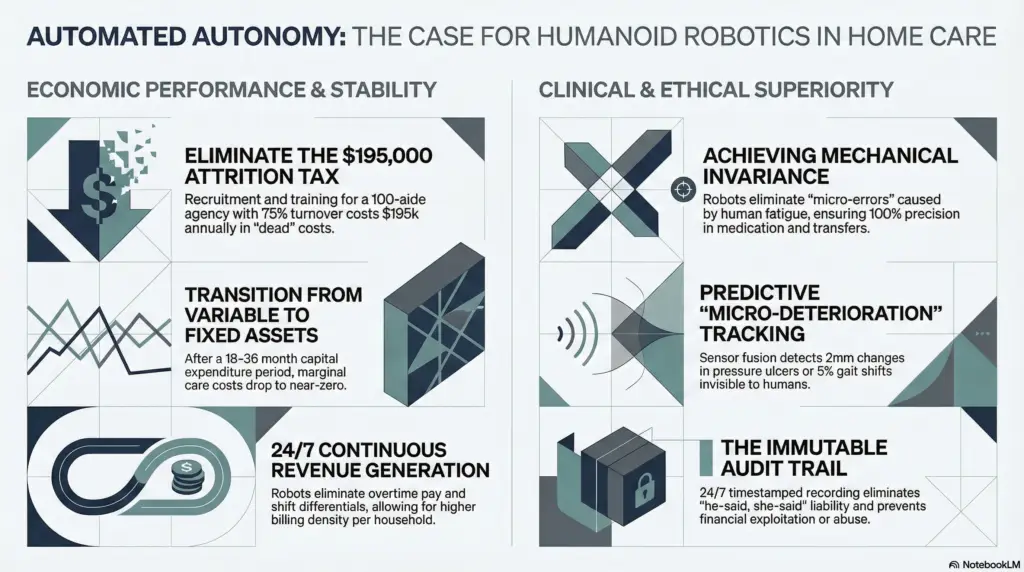
By: Jude Chartier RN / AI Nurse Hub Date: March 4, 2026 Introduction The American home care industry faces a dual crisis: a massive labor shortage and a systemic failure to provide safe, affordable, and consistent care. While the current paradigm prioritizes “human-centric” care, this model is increasingly defined by high turnover, caregiver burnout, and […]
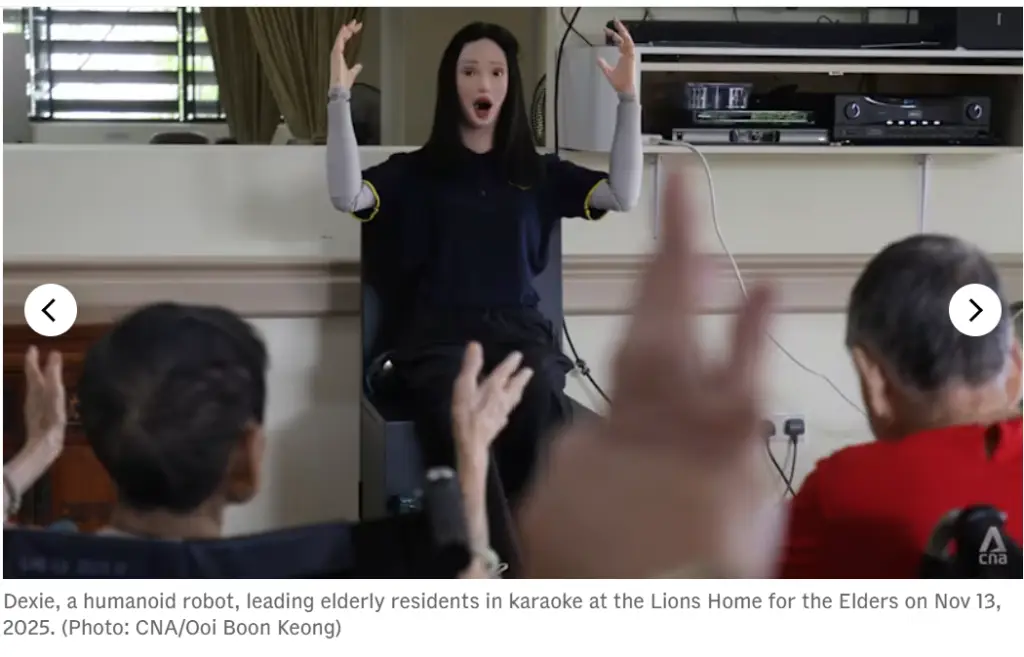
Singapore has successfully integrated motion-sensing robots and smart gadgets into the homes of 5,000 seniors post-discharge. This pilot shows a significant decrease in readmissions, as the robots detect subtle changes in patient behavior, allowing nurses to intervene virtually before a medical crisis occurs. Read More
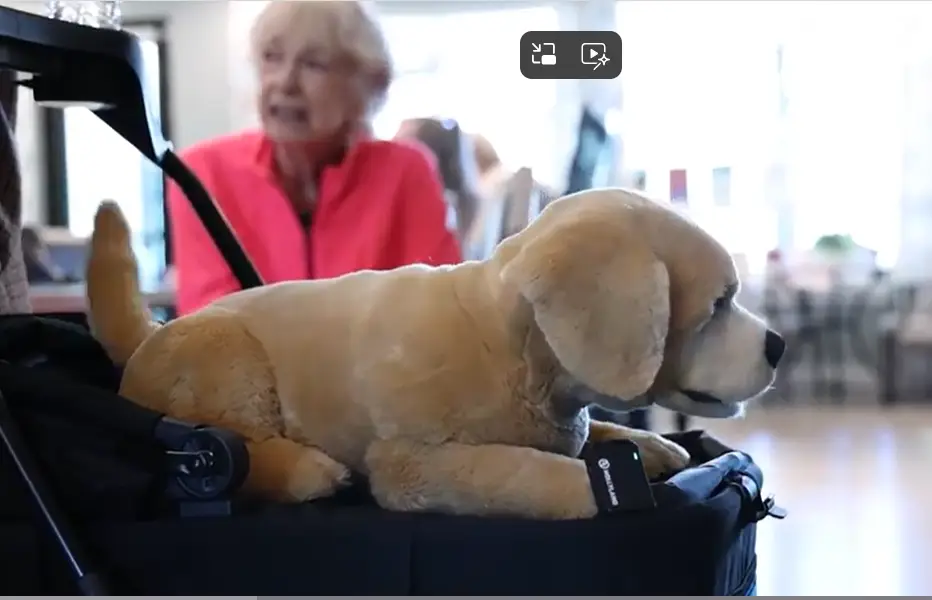
Originally a social robot, Tombot’s “Jennie” has been updated for 2026 with medical monitoring features. In home-based dementia care, it provides realistic emotional support while tracking patient vitals and alerting nurses to potential emergencies, acting as a non-threatening 24/7 monitor for recently discharged seniors. Watch The Video
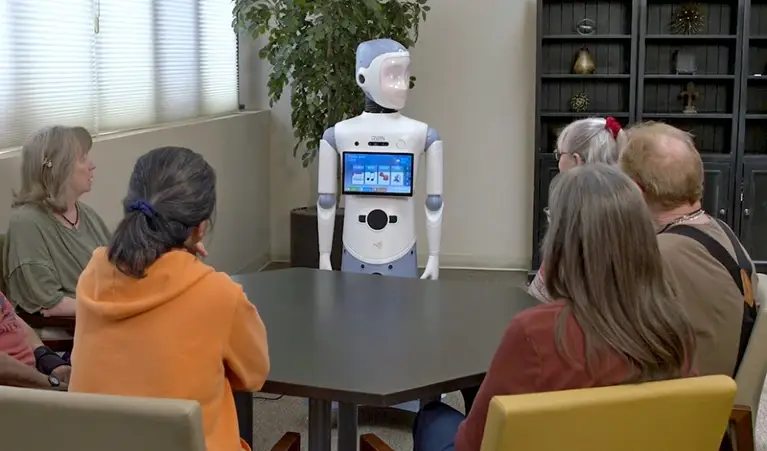
This Nature report examines the multi-billion dollar investment in socially assistive robots. While debates continue regarding the “human element,” nurses are finding that these robots successfully bridge the social isolation gap post-discharge, which is a major predictor of hospital readmission for the elderly. Read More

This comprehensive 2026 toolkit identifies 25 critical ways AI is currently impacting nursing. It specifically highlights “Physical AI”—the use of hardware to handle logistics and home-based vitals monitoring—as a foundational skill for future “Hospital at Home” nurse specialists. Read More

1X Technologies has officially released its “NEO” humanoid robot, priced at $20,000 for early adopters. Specifically built for home care, NEO uses “tiered autonomy” to assist post-discharge patients with physical chores. For nurses, it offers a “teleoperation” mode, providing a remote physical presence to assess patients and their environment. Read More
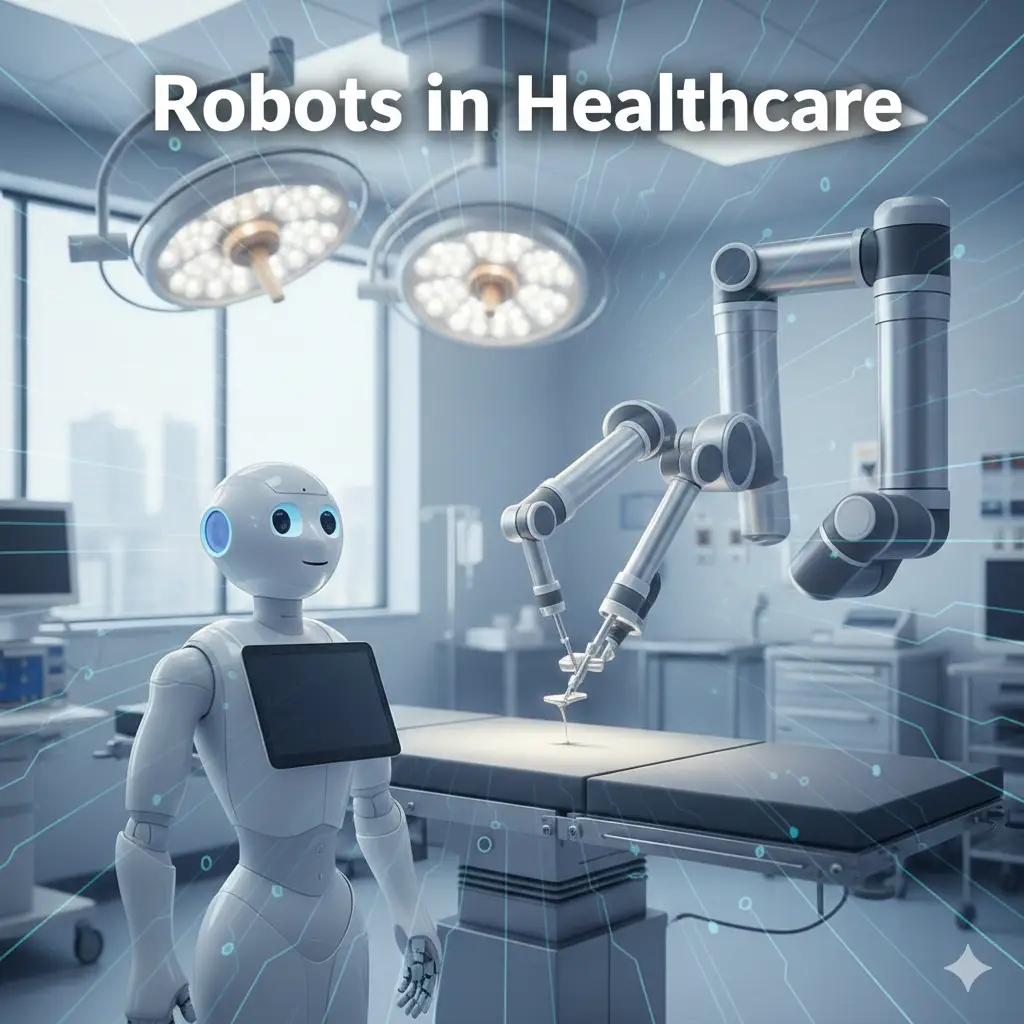
The AI Care Companion Robot market was valued at $27.37 million in 2025 and is projected to grow to $169 million by 2034, reflecting a compound annual growth rate (CAGR) of 33.3%. The report analyzes market dynamics, key players, and innovations shaping this rapid expansion. Read More
Healthcare in 2026 is undergoing a major transformation, moving beyond basic digitization toward AI-powered, human-led models that reshape care delivery, financing, and patient experience. Driven by agentic AI, data interoperability, and workforce shortages, organizations must re-architect systems to enable scalable autonomy and meet rising structural pressures. Read More
By using AI agents to manage unified chat, voice, and SMS channels, Sutter Health has drastically reduced patient frustration. For clinic nurses, this ensures that only high-complexity patient inquiries reach their desk, while the AI manages routine follow-ups and appointment scheduling autonomously. Read More
Following successful logistical pilots, the U.S. Department of Veterans Affairs has awarded contracts to scale autonomous support systems, including delivery robots, nationwide. For VA nurses, this represents a massive reduction in the physical “logistical drag” of transporting linens, labs, and meals, returning approximately 2.5 hours of bedside time per shift. Read More